










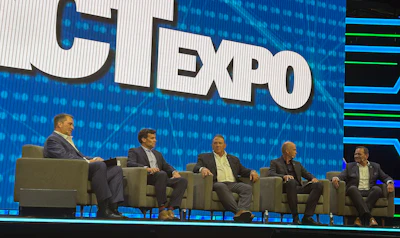
Executives from most of North American's largest truck and engine manufacturers gathered at the ACT Expo Monday to discuss the rapid transformation of their sector. The panel, featuring presidents and top leadership from Cummins, Mack Trucks, International Motors, and Volvo Trucks, highlighted a shift from purely mechanical assets to software-defined vehicles centered on connectivity, safety, and operational efficiency.
'New normal' of uncertainty
The session began with a reflection on the current state of the industry following years of pandemic-related disruptions. While some hoped for a return to traditional market cycles, Mathias Carlbaum, President and CEO of International Motors, argued that constant disruption is the "new normal."
“There’s always something big going on,” Carlbaum said, citing geopolitical and economic volatility. He noted that the industry is undergoing simultaneous shifts in emissions regulations and digital architecture, creating a uniquely complex environment.
Peter Voorhoeve, President of Volvo Trucks North America, agreed, suggesting that the pace of change has accelerated. “In the last seven years, more has happened than maybe in the last 70 years,” he said,
Rise of software-defined vehicles
A major theme of the discussion was the transition toward software-defined vehicles. Jonathan Randall, President of Mack Trucks North America, emphasized that while the physical truck remains the "price of entry," the industry is increasingly differentiating through digital services.
"Connectivity, AI, and big data—the vehicle just becomes an enabler for so much more," Randall said. He highlighted the success of over-the-air (OTA) updates, noting that Mack’s fleet went from 35% to 88% software update compliance in just four months.
Brett Merritt, President of Cummins’ Engine Business, added that even for engine manufacturers, digital integration is critical. Cummins is leveraging AI for knowledge transfer between retiring engineers and new hires, he said, as well as for predictive maintenance that has already saved over 200,000 service hours.



Safety as a business imperative
The executives underscored that advanced safety technology is no longer just an option but a core priority. Voorhoeve noted that Volvo has made features like side curtain airbags standard, regardless of customer preference.
“I don’t think that that should be the discussion in the purchase of a truck,” Voorhoeve said. “You need to do whatever you can in order to keep the road as safe as possible”.
The panel also discussed the economic case for safety. Voorhoeve cited data showing that the average non-injury truck accident in the U.S. costs approximately $46,000. “If you can avoid three accidents in a year, that’s almost a free truck,” he noted.
The Future: Autonomy and "trucks by the hour"
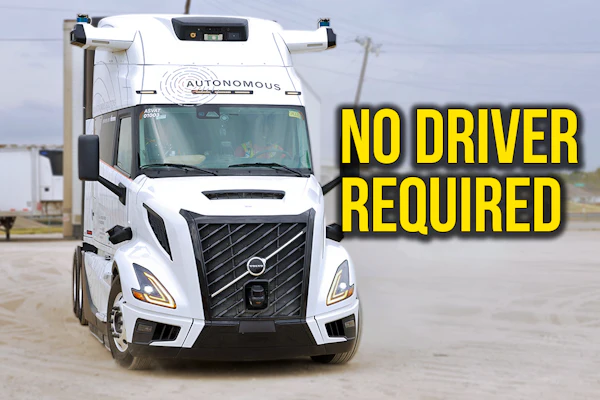
Looking five to ten years into the future, the panelists predicted the commercialization of autonomous vehicles and the potential for new business models, such as "trucks by the hour" or mileage-based usage fees.
While electrification and alternative fuels are gaining traction, the leaders agreed that diesel and internal combustion engines will remain vital for the foreseeable future.