











While artificial intelligence offers powerful efficiency gains for trucking and logistics companies, the growing prevalence of Shadow AI and data breaches highlights the urgent need for carriers to establish practical oversight frameworks.
- The Threat of Shadow AI: Unapproved AI tools, browser extensions, and vendor add-ons are processing sensitive operational data without internal policy, driving up data breach incidents and costs across the logistics sector.
- Benefits of Structured Oversight: Proper AI governance acts as road guardrails—protecting proprietary data, ensuring safety-critical decisions remain human-driven, managing vendor risk, and accelerating safe technology adoption.
- Industry-Tailored Standards: The NMFTA Cybersecurity AI Governance Framework provides 50 practical, standards-mapped controls specifically designed to help carriers benchmark security, compliance, and risk management.
- Actionable First Steps: Fleets can start managing AI exposure immediately by assigning internal ownership, auditing current tools, writing clear usage policies, vetting software vendors, and planning for system failures.
In July, I wrote: “Artificial intelligence (AI) is already active inside most transportation companies. In many cases, it arrived without an intentional decision, having been bolted on by vendors to existing platforms. These tools are now processing your operational data with no internal policy governing how it is used, who owns the output, or what to do when it gets something wrong.”
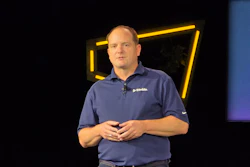
Since then, AI has remained a prominent topic at industry conferences nationwide. Ben Wilkens, Director of Cybersecurity at National Motor Freight Traffic Association (NMFTA), re-introduced the NMFTA Cybersecurity AI Governance Framework at the American Trucking Association’s Technology & Maintenance Council (TMC), while several presenters discussed AI risk at last month’s NMFTA Cybersecurity Conference. These discussions highlighted AI’s potential but also warned of the risks of inadequate governance.
The cost of going ungoverned
Trucking is attractive to threat actors due to the highly fractured nature of the industry and slim margins which constrain cybersecurity budgets. They leverage the AI that is already present in many companies, often without company approval or knowledge, so-called “Shadow AI.” All it takes is a browser extension installed by a dispatcher. In early 2026, two Chrome extensions posing as AI assistants were caught harvesting ChatGPT and DeepSeek conversations from roughly 900,000 users giving unauthorized access to the sensitive information used in those conversations.
The IBM's 2026 Cost of a Data Breach Report notes that cybersecurity incidents related to workers using Shadow AI increased to 43% in 2026, up from 20% last year. These incidents led to higher average breach costs this year, $5.39M. Other consequences included data compromise, disrupted operations, and reputational damage.
Governance creates guardrails, not barriers
Sometimes we hear the word "governance" and picture a committee that slows everything down. Done well, governance does the opposite. It is like guardrails at the edge of the road keeping drivers safe. Good AI governance delivers concrete benefits, while managing AI risk:
- It protects the data that sets the company apart. Clear rules on what data goes into AI tools, what information comes out, and who is checking the outputs for accuracy help keep company secrets from leaking through a chatbot or into a vendor's training dataset.
- It keeps safety decisions in human hands. Governance defines when a person must review and approve an AI recommendation before anyone acts on it.
- It manages your vendor risk. Governance defines contract requirements for data ownership and residency, security testing, and AI model updates.
- It builds trust with drivers, shippers, and insurers. Transparency about how AI is governed and implemented helps manage expectations for drivers and customers to head off disputes. Evidence of effective controls over AI gives underwriters and auditors something concrete to evaluate.
- It makes adoption faster and more efficient, not slower. When leadership has already defined its risk tolerance and established an AI implementation and approval process, adopting each new AI tool becomes routine.



Framework built for carriers, not coders
The NMFTA Cybersecurity AI Governance Framework turns those benefits into specific, achievable actions for trucking.
Each control maps to the major AI standards: the NIST AI Risk Management Framework, ISO/IEC 42001, and AIUC-1. A carrier that implements the NMFTA AI framework-recommended controls builds benchmarks that customers, auditors and insurers already recognize. A built-in implementation checklist helps teams track the progress of implementation control-by-control.
The framework ties directly to each benefit:
- Data protection: Data input and output policies, role-based access controls, and safeguards that keep sensitive data from unauthorized or inadvertent exposure.
- Safety: A documented list of high-risk outputs, such as routes that exceed hours-of-service or weight limits, and human review before high-risk actions are taken.
- Vendor management: A due diligence questionnaire covering data handling, breach notification and sub processors, plus annual review of security certifications.
- Trust: Notifying drivers when in-cab systems use AI-based event detection and explaining what data those systems collect.
- Speed: A documented leadership-approved risk appetite and tolerance guides how AI tools are adopted and configured, makes AI implementation a matter of routine rather than never-ending debate that often leads to Shadow AI.
Where to start
Fifty controls can look daunting, but no carrier needs to tackle them all at once. The first five steps will put most fleets on solid ground:
- Name an owner. Assign accountability for AI governance at your company.
- Take inventory. List every tool with AI features, what it does, who owns it and what data it accesses.
- Write a one-page policy. Tell employees what AI features may and may not be used for, and what to do when something goes wrong.
- Question your vendors. Ask where your data is stored and secured, whether it trains other customers' models, and how the vendor tests its products’ AI features.
- Plan for failure. Decide what to do if an AI-assisted tool goes offline or starts producing bad outputs.
The road ahead
AI will keep arriving in trucking, whether through new products or quiet software updates. Carriers that govern it deliberately will capture AI’s efficiency gains while protecting their data, their drivers, and their reputations. Those that do not will discover their AI exposure the hard way: in the middle of an incident.
The NMFTA Cybersecurity AI Governance Framework is available at no cost. It gives every fleet, from a regional truckload carrier to a national LTL network, a road test for its AI tools.