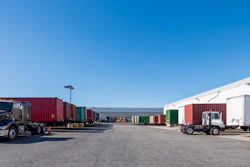











Driving by a Texas grocery chain’s distribution center, I often took pictures of the line of tractor-trailers patiently waiting to be let through the gate to make deliveries to the warehouse dock or pick up loads. The sheer inefficiency of having millions of dollars of inventory, vehicles, and drivers sitting in line at this facility was remarkable.
Efficiency improvement is all about data. Measurement is the first step toward improvement. Complaining about rising costs while ignoring data is a sign that change is needed. Data is everywhere; not using it is arrogant and naive.
It’s pretty simple. Look at the Port of Oakland, the San Pedro Bay ports in LA, or the ports around Tacoma. They have gates, just like nearly every distribution center or warehouse. In real time, they record data about when trucks go through those gates, both entering and leaving. They know how long it takes for a truck to arrive, wait in line to get through the gate, do its job inside the fence, and then leave. All that data is tracked, reported, and analyzed under the term “truck turn time.” Many ports even have time or distance measurements for the queueing outside the gate. Some port governing agencies have even offered incentives for smart steps to reduce truck turnaround times. Even U.S. border points track and report commercial truck wait times.
That rich turn-time data allows for trend analysis—figuring out when and why efficiency improves or worsens. And it’s not just the trucks that are tracked at these ports; they track containers, both empty and full. They track the ships coming and going. They track the rail yards. Measurement is everything to efficient port operations, and efficiency is all about cost management.
Business schools teach MBA students that inventory in process is bad. The technical term is WIP inventory, or Work-In-Process. The longer it takes for inventory to get from the point of creation to the point of sale, the higher the expenses for companies and consumers. Efficiency experts make careers out of going into factories and spotting excessively wasteful product paths moving around a facility.




Years ago, I reviewed an electronics manufacturer near Dallas that was going through economic hardship. The company sold itself to a French company. One of the first things the new owners did was interview the staff and analyze the in-building path lengths for products. They discovered their products were traveling over a mile inside the building, with multiple stops along the way. Some fairly obvious changes—many recommended by the existing staff—reduced those paths significantly, shortening travel time and distance for the products from miles to feet. These improvements greatly reduced the WIP inventory and associated costs.
WIP inventory is not just found inside a factory. If you ever talk to a truck or car dealer about in-process inventory, you will discover the concept of “carrying costs.” Those vehicles sitting on the showroom floor and out in the sales lot cost money simply by sitting and waiting to be purchased. The longer the product sits around, the more it costs the dealer. A technical term for these is holding costs—the cost of storing inventory.
Costs accumulate every second inventory is in the supply chain, from the raw materials heading toward a factory until the moment the finished product is delivered to an end customer. It’s not always clear who is paying all those costs, but they are always there. Letting trucks sit in line at gates or waiting at docks is the equivalent of wasting money. It’s like taking cash out of your wallet, crumpling it up, and throwing it in the garbage. Wait times always increase costs.
The challenge in reducing those costs is figuring out just who is eating them. Is it the warehouse, the shipper, the consumer, the transporter, or someone else? Often it’s all of them, in part, buried in the vague phrase “overhead.” Overhead consists of all those costs you can’t assign to anything because you aren’t tracking them. They flow to the bottom line of balance sheets. They are real; you just choose not to measure them.
Some 30 years ago, the concept of Just-In-Time (JIT) inventory started making headlines. The concept is that products or services show up exactly when needed. This supposedly reduced costs across the supply chain. It reduced the need for warehousing, reduced WIP inventory and associated costs, and reduced the number of trailers and railcars transporting materials.
Reality often interceded with this vision. Factories often found that one missing parts shipment stopped the entire assembly line. One weather, traffic, or accident delay instantly ate up all the supposed savings. Building new warehousing in a JIT world was anathema to the vision, so factory managers got creative. They started storing parts inside trailers parked on their lots or nearby on someone else’s. This increased the practical WIP inventory while looking like JIT was winning the war on costs. More creative labeling might today call this a “virtual pipeline.”
The ports seem to understand the criticality of data collection and analysis. They also seem to understand the need for transparency—letting everyone see the data. The problems are group problems, and improvement is in everyone’s interest, so they seem to embrace visibility to help improve efficiencies.
Yet truckers all over North America wait. They wait a lot. If the wheels aren’t turnin’, they’re not earnin’. More importantly, if the trucks ain’t movin’, they are still costin’. A truck stuck in line at a gate, waiting somewhere for a delivery dock, or waiting to be loaded or unloaded is costing money every second.
GPS tracking data measures all those details. Every truck has electronic logging devices. There are services out there like Geotab, Samsara, and others helping collect and process telematics data. Every gate likely is collecting data on inbound and outbound trucks and trailers. It’s time the industry makes use of all that rich data to focus on improving efficiency by reducing WIP.
Just quantifying how much time a driver is not moving during their hours of service seems like an easy ask with all this data in hand. Stop surveying people and start using hard data accumulated by all these sources. Like the ports, track and analyze how long a truck or trailer is sitting, not moving, or if a truck is just driving around inside the gates.
And it’s not just tractors that wait. Tractor-trailer ratios from big fleets show that, on average, there are three or four trailers for every tractor. That means somewhere in a company’s process, they have assets not moving—not being used—at any given time. How long are they sitting? Where are they sitting? Are they loaded or empty? How often are they moving but empty?
Complain about high fuel prices as much as you wish, but do something about the things you have control over: wasted time, wasted miles, and wasted money. You have all the data you need to do just that.