










Join CCJ Editor Jason Cannon and Peterbilt Marketing Manager Zach Gross on a 110-mile test drive through the scorching 100-degree Texas heat from Denton to Bowie and back.
In this video, we dive deep into the Gen 2 Peterbilt 579 equipped with the EPIQ Max aerodynamic package and the 80-inch UltraLoft sleeper. Pulling 65,000 lbs with a full PACCAR powertrain (MX-13 engine pushing 455 hp), we explore how Peterbilt balances owner-operator style with high-efficiency fleet performance.
Contents of this video
00:00 2024 Peterbilt Model 579 UltraLoft Epiq Max
00:44 What Makes It an Epiq?
01:31 What Makes It an UltraLoft?
02:29 Gen 2 Updates: Hood Redesign & Customizable Digital Dash
04:01 Gen 2 Updates: Powertrain, Fairings, Headlamps & Interior
05:26 Camera Mirror Systems & Modern Safety Integration
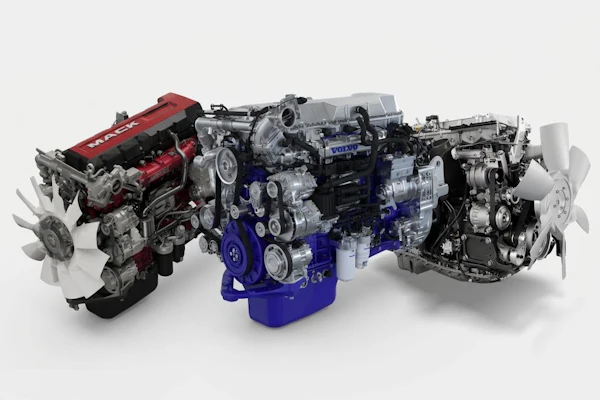
06:05 PACCAR MX-13 vs. Cummins X15 Powerplants
07:57 Additional UltraLoft Features
09:00 Interior Ergonomics & Driver Comfort: Work Tray, Switches & Storage
09:46 The Future of Truck Tech
11:55 “Passenger Carification” of Transportation
14:15 Owner-Operator Style Meets Fleet Efficiency
15:13 In-Depth UltraLoft Sleeper Tour (SmartAir, Storage, Bunk)
16:43 Final Drive Impressions: Test Drive Wrap-Up
Speaker 1:
Today we're going to be taking this 579 out to Bowie, Texas and bringing it back on a test drive. Hey everybody, CCJ editor Jason Canton here, and we are in Denton, Texas today at the end of July in a hundred degree heat because none of us on a calendar and we don't understand how weather works. Now the 579's been around since about 2012. Obviously this is not a model year 2012. There's some newish technologies on here that I want to get to experience and I want to show you guys. And I'm going to ask Zach Gross, Peterbilt marketing manager to kind of talk to us a little bit and tell us a little bit more about it. So we're going to hop in this truck. We're going to hammer the HVAC because it is 100 degrees out here and we're going to do it right now.
579 introduced in 2012. Two years later, we get the 579 Epiq. And this is an Epiq. So what makes it an Epiq?
Speaker 2:
What makes it an Epiq? It's got all along the fenders, along the front, you have an air dam where the bumper's at. Your fairings have shields at the bottom. There's closeouts at the wheel well. Anywhere where you can prove any kind of aerodynamics, we do so. So like at the wheels, we have fairings at the tandem axle to close out the gap in between the tandem wheels there. We have wheel covers to improve aerodynamics there. This truck right here, it's an Epiq Max package is what we call it. And it's basically just got closeouts and shields everywhere to make it as aerodynamic as possible.
Speaker 1:
So Pete in 2018 comes out with the Ultra Loft.
Speaker 2:
Yep.
Speaker 1:
What makes this an Ultra Loft?
Speaker 2:
So the Ultra Loft, the sleeper's fully integrated into the cab. So it's not a cab that gets bolted on from the back, but it's completely integrated. So whenever you see in our factory, we have a cell specifically designed for the Ultra Loft for building that. It's a quite oppressive robotic assembly that's putting all that together, but making the cab and the sleeper one seamless design that's completely integrated. So whenever you look at the roof bearing, for example, there's a really smooth transition from the cab to the sleeper, all in an effort to improve our aerodynamics and get the most fuel economy.
Speaker 1:
Headroom in an ultra loft is what? Eight feet?
Speaker 2:
Yeah, eight feet. The tallest in the industry. It's an 80-inch sleeper, so it's a long sleeper. We have some of the biggest mattresses in the industry. Our mattresses are, not only are they long, but they're wide too. And then really good headroom. So
Speaker 1:
2012 is the birth of the 579, and two years later it's the Epiq. And then 2018 is the ultra loft. And then 2021, the 579 enters its second generation. Yep. And that second generation included the digital display here. And you guys are one of the first ones to go to a digital display. I think it's still the largest one, but tell me a little bit about the gen two. What happened from gen one to gen two?
Speaker 2:
Well, since you said the digital display, we talked about that first. So we went from kind of a small screen with analog gauges to a fully digital display. Inside the display, you have all the gauges and things that you would expect from a truck, but the driver can put up whatever he wants to see in real time or minimize it for those that don't really want to see gauges. So it's kind of really customizable for the driver to be able to set up things as they want to. I mean, on the exterior of the truck, it's brand new hood. The hood is shaped around. We have a different cooling module package that came out. And so with that, we narrowed the hood and the hood's lower, so it's better visibility and also better aerodynamics. We went through, I can't even tell you how much computational fluid dynamics or CFD we did.
Working on the aerodynamics of this truck to make it exactly right. You'll notice the mirrors here, they have a very aerodynamic design to them. Those were redone with this truck. It's a new bumper design that matches the hood design. Again, it's all about aerodynamics and it's got an air dam for good airflow. The powertrain system, so some of the things in the powertrain changed. I talked about the cooling module. Also, the air cleaner now sits on top of the engine. Engine mounted air cleaner for the approved acoustics. The old generation had air cleaner that was on the firewall. The engine mounts are acoustically tuned as well, and that's all in an effort for the nice quiet cab. The fairings are different on this truck. We have fairings that you don't need tools to tip them out so you can get to your DPF SER or fuel tank or dev tank or whatever.
So those are all new. The headlamps, so whenever we launch this truck, we have LED headlamps or you can get halogen. The LED1s have heating on them. So if it's cold and icy or whatever, make sure to get your lamps hot and get the ice off of them. Along with the forward lighting, whenever we launch this new truck, the LED fog lights on it, they're pretty neat. They do a couple different things. So they're fog lights for sure, but they're also driving lights. And then at nighttime, whenever you're turning left or right, it illuminates where you're cornering at. So it just adds a little bit of brightness to show you what you may be turning into. So I guess on the interior, we had a new dash, some new interior colors along with that display that we talked about. But yeah, it's a good truck.
Been out for a little while now and everybody I talk to seems to really enjoy
Speaker 1:
It. How about the camera mirror system? I mean, it's 2026, so six, seven years ago, that was a futuristic, "Oh, that'll never happen." And now they're basically everywhere. I mean, everybody offers a camera mirror system as an option. So what are your thoughts and what do you hear from customers who are looking at specking that as an option on their unit?
Speaker 2:
I think it's a good improvement. Some of the drivers that I've talked to that use it, especially at nighttime, they really like at night for it to have a night vision where you can clearly see, especially whenever you're backing a trailer, be able to clearly see where you're going at. Like you say, cameras are kind of everywhere, but I think moving forward, they're just going to become more and more integrated into the truck.
Speaker 1:
What about MX Power versus Cummins Power? I know when it comes to Peterbilt, I have my choice of power plants. What's the percentage split between MX Power?
Speaker 2:
It was fifty fifty for a while. It's not quite there. The PACAR powertrain in 2024, we had some more design enhancements to the powertrain and we've been collecting a lot of data for years now. But when you look at the improvements we did with the 2024, our uptime's been phenomenal. There used to be some issues we'd have with injectors and camshaft and all that's gone away. So the reliability of our PACAR MX engines is very good, if not better than some of the competitors that we kind of benchmark ourselves to. Power-wise, this truck that you're driving here is 455 horsepower. It can go up to 550, I believe. It's a good powertrain. This 450 is really good for line haul and things like that. And then when you get those higher horsepower, wherever you're in a lot of hilly areas or heavy haul or whatever, that's whenever that's a really good engine for that.
And of course, Cummins is a great engine as well, but I think the PACAR MX engine has just really come a long way in the last few years. It's a good engine for people.
Speaker 1:
So what's the difference between a Cummins customer and a MX customer? If I have the ability to spec one or the other, have you noticed any trends to where this type of driver or this type of fleet tends to go this way versus the other way?
Speaker 2:
There's definitely some of that. We have some customers that we buy X15s, that's all we've ever bought. That's all we want. And there's more to it than that because there's some people that kind of have their home base, they have their shops with certain parts in them, and they might stock parts for just an X15 or for an MX. And so it can be kind of company dependent, fleet dependent, depending on how they're operating. For good fuel economy and weight savings, the MX engine is, it's got good fuel economy. It is lighter than the X15, so that's something that detective accounts. Yeah, you were asking about ultra loft. I think another cool thing that I didn't mention earlier is when you look on the back wall, you see the bird into the back of the sleeper. Kind of like a unique nod to the front of the truck because we have our bird pull handle, kind of that unique style to it.
And so I like how they did that with the styling group, kind of integrated some features into the back wall there. You don't always see it. It's kind of a cool touch that I like. Did something similar too with the air intakes whenever you look at them, kind of look at the bird and the whole transition. It's just really smooth the way that all the lines go from the front to the back of the truck. We were talking about the mirrors, just some other things about the mirrors. So right now we have the DBSM that we were talking about, but we also have, it's the same mirror profile, but it's a flat glass and just a standard convex. It doesn't have the mirror in it. And it's that same shape, our aerodynamic mirror. And then also we've got a taller mirror. There's a little bit more of a viewing angle to it is another option for those that want that.
So there's a few different flavors of things that you get. You asked what are some of the things that we added or improved with this next generation? And some of the things in the interior we did are these switches here. They're nice big switches. It's easy to see what each rocker's going to be doing. We have a pullout tray that I forgot to mention here. So just easy to. If you need to do some paperwork or something real quick or open up a laptop to check something, you can do that. The cup holder design is new. Nice big wide cup holders, a good place to put your phone or a clipboard or whatever. Just trying to be really thoughtful about drivers and their needs, where they need to put stuff, making sure there's storage, ample storage. So pretty much everywhere you look in here, you'll find a place where you can put something, try and make it more comfortable and easier for the driver.
Speaker 1:
So the last update was 2021. That's five years ago, six years ago if you count the 2027 model year. So we've got to be right for an update. The integration of some new technologies. What do you feel like the next horizon for the next generation truck is going to include? What do you think?
Speaker 2:
One thing that we're always looking at is safety systems. Right now, this truck you're driving has a Fusion 3.0, so it's got adaptive cruise control and emergency braking and those sorts of things, and that's great. But we're continuing to look at what's the future generation of safety systems going to look like. I'm positive that it's going to leapfrog where we're at now. Other things, I mean, we're always driver focused, like I was saying a minute ago, just about how we do our interior, making sure that it's going to be for the driver. Who knows? There's other technologies that we're working on with ADOS that will likely get integrated into whatever that cab ends up looking like. There's all sorts of powertrains on the horizon. I think your guess is as good as mine on what'll be the next powertrain that'll really hit the market and run.
I think having a platform that can integrate in multiple different powertrains is going to be something that we'll be looking for whenever that next generation comes. Technology and safety systems, like I mentioned, cameras will probably be in abundance. I would think that there would be cameras all over that thing because that seems to be the way things are going, both for safety, for autonomy and driving systems. I don't know. I'm sure there's going to be a lot of things that I'm not even thinking of right now that'll be on that truck. But you said, I mean, right now we're about five years into this. Typical refresh cycle for Peterbilt, it's usually like 10 to 15 years, sometimes longer, sometimes shorter. We're about halfway in that there. So maybe we see something new in five years or I don't know. I don't know which way that's going to go.
Probably your guess would be as good as mine. Again, like
Speaker 1:
I said - 2012 to 2021 was nine years.
Speaker 2:
Yep.
Speaker 1:
So what are some of your thoughts on, I'm going to call it the passenger carification of transportation? We see a lot of these driver assistance systems that started in passenger cars. Basically the only thing that we don't have is a backup camera because you couldn't see it because of the trailer. But do you feel like a big truck is almost too easy to drive? Because I know a lot of the old school owner operators feel that way. It's gotten too easy. The barrier to entry has come down too far. So what do you think about all the technology and trucks?
Speaker 2:
I think everybody knows about the driver shortage that we've had and making trucks easier for people to get in them. For fleets to be able to get drivers that'll drive them and drive them safely. I think that's a big deal. I like the old school trucks, the owner operators, the 389s, the 589s, the 379s. I think those are really cool trucks and I hope they're here to stay for a really long time. But that type of truck fits a certain group of people. And then there's other people or other companies that are looking for something different. And we were talking about this a little while ago, but you got to have the right truck and the right application. And so these technology forward trucks, there's applications for them and their needs for them. So I think they're here to stay and they're only going to continue to grow and become probably more automotive-like to make it easier for people.
I was talking to somebody last week and they're having some problems with their batteries dying with this one particular driver and he was trying to figure out what was going on here. So the fleet manager went down to check out the truck and the driver had a whole video game set up going on in his sleeper. And all the computers and whatever he was using for his gaming, it was killing the batteries. And the fleet manager didn't know that. And it's not something that you'd probably have to think about truckers having a bunch of gaming equipment in their sleeper 20 years ago, but now it's like, oh, well we got to make sure we spec a truck that can handle whatever this driver's going to be doing to it, including all the gaming and computing and whatever. So there's things that are changing and I think it's just something that Peterbilt has to watch as markets change and evolve and needs change and evolve, that we're making sure we're meeting customers where their needs are, giving them the product they need.
Speaker 1:
Peterbilt's kind of unique in that it's a very owner-operator brand, but this is a fleet truck. So is that advantageous you think?
Speaker 2:
I mean, yeah, I think it's definitely advantageous. We try and build the truck for the right people. And so we have our 579. It's a non-highway. It's a fleet truck. I mean owner-operators do buy it, but mainly it's a fleet truck, good for fuel economy. There's some people out there that they don't really want that. They want something that looks cool. They want something that drivers want to get in and just be like, "This is a cool truck. When I call it tow truck, stop areas and be looking at it." And that might be somebody that's more 589 driven or 567 driven. So like I said, just trying to meet people where their needs are and provide the best truck that we can. Something that looks good, that performs good, that people are going to love driving.
Speaker 1:
Zach and I have been in this truck for about two hours and roughly 110 miles. And I want to get Zach to hop in the back and tell us about the comfort area for when we get out of the driver's seat and we want to hop in the bunk.
Speaker 2:
All right, this is our ultra loft sleeper. I want to show y'all some of the features and benefits here. I'll start with some of the storage. So you got storage down here. Got a work tray right here. Here's your sleeper controls right here. More storage right here. You got power right here for anything you need to power. Light. Here's a spot for a microwave. Additional storage up here with more power supply. Here's our bunk right now. It's folded up, easily folds down. And then here's our ladder. Tucks away nice and easy for whenever you don't need it. In this truck, we have windows, one down here, one up here. Down here at the bottom, a place to put shoes for whenever you want to store those. This is our refrigerator. Here's a nice wardrobe closet. Be able to hang up clothes. More storage space up here.
Window over here in the corner. This truck's got smart air. Be able to keep your cab nice and comfortable without running the engine. Most headroom in the industry, it's an 80-inch sleeper. Come check it out.
Speaker 1:
Well, we're back in Denton, Texas at the Peat Plant, and somehow it is hotter now than it was when we left. This truck right here, the 579, has a best in class AC system as far as I'm concerned. It was a very comfortable ride. We were going about two hours, about 110 miles. Peterbilt is at this interesting intersection of an owner-operator brand with this fleet truck, but I think you can see a lot of the owner-operator influence in this truck. There's Chrome. There's a lot of flashy appointments. There's a visor. There's lots of cool things on this fleet truck. So you get the balance, the cool with the fuel economy, with the technology, with the safety, with the aerodynamics. So that makes this truck a little bit unique in its own little space. On our drive, we were tugging about 65,000 pounds. MX13 F-450 horse.
Didn't really struggle with it at all. There were moments you could tell it was there. There were moments you thought you were bobtailing, but it never really felt heavy. But the truck makes good power. This is a full PACAR powertrain, engine, transmission, and rear. Excellent ride quality. The 579 Gen two came out in 2021. That was five years ago. So for the 2027 model year, it'd be six years old. But the technology in this truck doesn't feel dated. The truck doesn't look dated. That's pretty unique in that you have a platform that's five, six, seven-ish years old, but when you get in there, it's still cutting edge. There's camera mirrors in this truck, the digital instrument cluster. That feels like a very old technology because it rolled out in 2021, but there's a lot of OEMs that are just now getting into that. So it's a very here and now thing that's been on this truck for about five years.
It all goes into making this a very tech-forward platform and it all integrates into the safety suite. If you're looking for a super efficient tractor with lots of safety technologies, lots of integrated technologies, but you don't want to lose that old school cool, the 579 is the way to go. If you like trucks, if you like engines, or if you just like trucking news, like and subscribe to this channel right now. You can also click in the link below and subscribe to CCJ's newsletter and check us out online at ccjdigital.com.