










While the industry continues to navigate the post-COVID hangover, the used truck sector has finally found its pricing floor, even as a capacity purge threatens to reshape the supply side.
The market is currently seeing a return to typical depreciation rates of approximately 2.5% per month for highway tractors.
A much-discussed 2027 Pre-buy may be more of a mild pull-ahead than a massive market disruptor. The increased supply of trade-ins will likely be offset by a modest recovery in cyclical freight demand. For the first half of 2026, the market is expected to bounce along the bottom, with any significant upward movement in pricing dependent on a sustained recovery in the spot market.
Contents of this video
00:00 10-44 intro; The used truck market 2026
00:42 Supply and demand of used trucks
02:15 Capacity and truck utilization
04:57 New truck pre-buy 2027
08:10 Used truck specs
Speaker 1:
With so much uncertainty in the world of freight recently, the used truck market has shown remarkable stability. Hey everybody. Welcome back. I'm Jason Cannon and my co-host is Matt Cole. Volatility around emissions and tariffs cast a cloud over new truck orders for most of 2025. Now couple that with volume and rates that never really rebounded. December, however, saw a nice bump in new orders.
Speaker 2:
When fleets don't buy new trucks, they don't dispose of old ones. Putting the used truck market in an odd holding pattern of sorts, never really becoming a buyer's or seller's market in the traditional sense. But in today's climate, buyers of trucks are doing better than sellers.
Speaker 3:
Pricing is lower than any dealer would like to see. That said, I think the market is kind of working in a equilibrium where demand as measured by contracting spot rates is fairly stable, spot actually looking to maybe be strengthening slightly. And on the supply side, we've worked through the worst of the post- COVID hangover where all the trucks that were purchased during COVID have been worked through the market for the most part. And incoming supply is at a manageable level. So both sides of the market is in equilibrium. It's just at a lower price point than dealers would like to see. So still, that means it's supplier's market. Just going off qualitative feedback, the stability in tariffs and some clarity on the 27 emissions are probably a tailwind. And what that would mean is if there are somewhat increased number of new truck deliveries will result in a mild increase in used truck deliveries.
Also on the supply side, you have a likely increase in the number of repos with finance companies finally getting a lot of those zombie trucker owned trucks off the books. So that could be a headwind to use truck values. That said, on the other hand, if the demand side picks up and it looks like the spot market may be showing some signs of life, that would suggest upward movement in pricing. All that said, put it all together. I don't see any huge change in the first quarter at least.
Speaker 1:
An ongoing purge of capacity either through bankruptcies or non-domiciled CDL and English language enforcement would take more trucks off the road. And Chris says that net loss of capacity would be worth it.
Speaker 3:
So the positive implication for that dynamic is you take more trucks out of the market that's an improvement in capacity and truck utilization. So you have fewer trucks out there to move freight, which should be good for the spot market and should support used truck prices. So yeah, the larger issue there is capacity and truck utilization. There was too much capacity. That's why truck prices are low. The more drivers you take out of the market, the better that portends for capacity, which would be a tailwind for used truck pricing. Now that said, I don't think we're at the point yet where the domicile and the English speaking requirements have made a noticeable dent in capacity. If 12,000 is, let's call it a good start. If we're just looking at capacity, we would need to increase that by exponentially to see any major impact in capacity and used truck demand or pricing.
You'd have an increased number of returning used trucks. You would increase the supply, but I think the more important factor is you remove those drivers and those trucks from being available to move freight. So I think the positive impact to the spot market of that eventuality is more meaningful than the increased supply of used trucks to the marketplace. There have been ongoing small to mid-size fleet bankruptcies since COVID, even in the past year, and they haven't really made huge impact on used truck supply or pricing. As far as the finance companies go, they've been sitting on the zombie trucks for three years now, just getting what they could get out of the owners because it's preferable to just writing that equipment off. So they've actually been cycling some of this iron through the market for the past couple years. And it will probably pick up this year, especially as those owner operators leave the market altogether and just walk away finally.
So yeah, it's just another factor that's going to result in an incremental increase in used truck supply. The finance companies don't want to write this equipment off and they still want to maximize their return. That said, it's usually going to be pretty high mileage trucks and a little bit older than average trucks that are being repoed from these owners. So the net effect, I mean, that segment of the market is already super weak. So how much weaker it's going to get, I'm not sure if that's of particular concern at this point.
Speaker 2:
The prospect of a new truck pre-buy ahead of model year 2027 has been all but completely wiped out. What does that mean for buyers and sellers of used equipment? Chris says probably not much.
Speaker 3:
In a pre-buy, the downside is, as you mentioned, to the used truck market where if you pull ahead new truck sales, of course you're going to pull ahead trade-ins too. So a couple different segments of used trucks, of course. One is the late model, low mileage segment, and that it's always strong, but in a pre-buy, it's even stronger. And in reality, in the past two years or so, that's been still a strong segment of the used truck market, even as the rest of it has depreciated. So late model, low mileage use trucks are always a good substitute for new. The main reason that the pre-buy exists is for new truck buyers to get ahead of price increases. So if you can buy a two-year-old used truck with 300,000 miles on it for half the price of a new truck, that's a pretty attractive proposition. And that's why the late model used trucks benefit in a pre-buy.
Now that said, the average truck sold is older than that and has more miles than that. And that's the segment of the market that's been suffering since the COVID, post- COVID hangover. We had some stability starting about a year and a half ago. I think we worked through the worst of that, as I mentioned earlier. So the question is, what impact any pull ahead, if it exists, will have returning supply. So that's going to balance out the predicted improvements in cyclical freight demand. So if we weigh the two sides, what the freight market is expected to do versus what incoming supply of use trucks is expected to do. It could probably be a wash, probably not too bad because like you said, the pre-buy is probably going to be either non-existent or just a mild pull ahead. So I guess net is probably not much of an effect to use trucks.
I think other factors are probably going to be at least as important as any pre-buy. So pricing has found a floor. We're back to typical depreciation, call it 2.5% per month, roughly for typical highway tractor. Incoming supply, we pretty much know what's happening there. Demand, if you measure that by spot market, we know what's happening there. That's definitely bouncing along the bottom, possibly poised to increase slightly. And then we've got a likely need for inventory restocking, which will be a positive, assuming that happens, if that's an accurate prediction. The foundational way I view the market, especially assets in a stable freight environment, used truck supply is the most meaningful factor to establishing used truck values, and that's where we are now. So a relatively stable freight market, albeit operating and bouncing along the bottom, is dependent on used truck supply. And that hasn't been a disaster for the past year and a half.
Now when the freight market starts to change, then the demand side becomes more important. Spot market becomes more important and things look like they might be ready to change upward somewhat. That overrides the truck supply situation. A more accurate way to put that is when spot rates increase, the market can absorb more used truck trades because capacity needs to grow at that point.
Speaker 1:
With such small numbers of shoppers in the market, what kind of specs are they looking for?
Speaker 3:
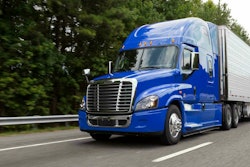
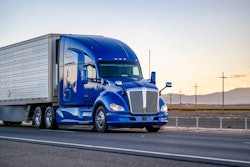
Big sleeper, big power and automated transmission, of course. Manuals are ... 10 speed manual is dead, of course. On an owner operator truck, they still like 18 speeds and 13 speeds still have some place in the marketplace that it's a fraction of the automated marketplace though. Of course, we're talking about aerodynamic sleeper trucks. There's still a fraction of the market that's buying long and tall Chrome rigs and they like their 18 speeds and sometimes 13 speeds. And of course the specs have to be super top notch for those trucks to bring top money, but there still is a very small market for that that hasn't changed much, surprisingly, even since before COVID. So just to expand from that a little bit, day cabs have been discussed pretty heatedly in the past couple years. They had the same problem that sleepers did, which was they were purchased in much greater numbers during the COVID boom.
And then there was a hangover as freight went back to normal and those trucks were no longer used. So it took a little bit longer for those excess day cabs to hit the market just because day cab buyers typically hold onto their trucks longer than sleeper buyers. Sleepers call it a four year old is the most commonly traded truck on the day cab market. It's more like six or seven. So right around last year, maybe end of 24, we started to see a major uptake in daycabs and that market became oversaturated. So we're still working through that. Day cabs still have more depreciation to work out compared to sleeper trucks, which have been through the worst of their depreciation already. So I guess the most valuable truck in the used truck market is, at least on the highway side of things, is big sleeper, big power with an automated transmission.
Speaker 1:
That's it for this week's 10:44. You can read more on ccJdigital.com. While you're there, sign up for our newsletter and stay up to date on the latest in trucking industry news and trends. If you have any questions or feedback, please let us know in the comments below. Don't forget to subscribe and hit the bell for notifications so you can catch us again next week.