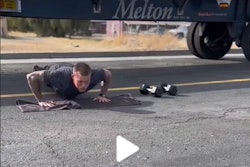











Getting healthier is a popular New Year's resolution, but how many people stick the landing? What percentage of people who decide this year is the year to drop those added pounds, or eat healthier, or stop smoking, and make all the hard decisions that get them to where they want to go? According to DriveResearch, just 9%.
That's alarming considering that 70% of the nation’s truck drivers are obese. The physical toll of the road is severe. Poor health among drivers is endemic, driven by a sedentary lifestyle, chronic stress, poor diet, and low sleep quality.
The consequences are measurable:
- Life Expectancy: The average life expectancy of a truck driver is just 61 years.
- Chronic Disease: Drivers suffer from double the rates of heart disease and depression compared to the average U.S. worker.
- Diabetes: The rate of diabetes among drivers is twice that of the general population.
In this week's 10-44, we talk with Project-61's Jeremy Reymer and Dr. Mark Manera who offer some tips to drivers and fleet pros that might want to get healthier and keep themselves out of that 91% failure rate.
Contents of this video
Speaker 1:
70% of the nation's truck drivers are obese, and we've got some tips and tricks for all the drivers out there planning to go the new year, new me route with their new year's resolutions. Hey everybody, welcome back. I'm Jason Cannon and my co-host is Matt Cole. Endemic poor health among truck drivers is due to a sedentary lifestyle that's packed with stress, poor diet, and low sleep quality. The average life expectancy of a truck driver is just 61 years old. Truckers also have twice the rates of heart disease and depression compared to the average US worker and two times higher rates of diabetes than the general population.
Speaker 2:
Getting healthy will be a popular goal in a couple weeks when we turn the page to 2026, but it's easy to set yourself up for failure when the process includes completely reinventing your entire way of life. Success is about making small but meaningful adjustments and refining those adjustments along the way.
Speaker 3:
The process of a driver getting healthier is a psychological process disguised as a physical one. And I think the mindset that a lot of drivers go into, and I think it's even multiplied during the new year, is I'm going to start this 30-day diet. I'm going hard. I'm flipping everything upside down. I'm making all these lifestyle changes, going into the pantry, throwing all the Snickers and Twinkies away, and I'm only eating fruits and vegetables for the next 30 days. And they go into it from a perspective that's unrealistic and is setting them up to fail. And in general, our culture, this is outside of your trucking, but our culture in general is these fad diets that are unrealistic. The timeline is 30 days instead of the next 30 years of your life. And what I would really push a driver to say is I think January one is a great time to get started.
It's a great time to say, "All right, if I've got a fresh calendar, I'm going to start this year," but go into it with the mindset of, "Hey, I'm going to do this for the rest of my life. I'm going to do this for the next 30 years of my life." Instead of saying, "I'm going to do this for January and go all out and end up failing because I'm trying to do it too quickly and on the wrong time horizon." And the problem I see with a lot of drivers is that once you get into your 30s, 40s, and 50s, a lot of us have in the back of our mind, it might be conscious or subconscious of we've got 20 or 30 quote unquote failed attempts to getting healthier. And a lot of those failed attempts are because you set it up to be unrealistic and you did this 30-day sprint.
And so what I would really focus a driver to say is, let's focus on small things that you can do in your day-to-day life. Let's not get caught up on, I have to be perfect for the next 30 days, but say, "Hey, I'm going to do this for the rest of my life. So if Friday night happens and I eat a slice of pizza, that's okay. I'm going to hop right back on it Saturday morning because in the grand scheme of the next 30 years of my life, a Friday night pizza party is not that big of a deal." And so from there with that mindset, what I would tell drivers is just go through the average day of your life. Start in the morning from when you wake up and just kind of think through what you eat, what you drink, the environment you find yourself in, the activities from a physical movement perspective, and just make a mental note of it or even write it down.
And every single person who's a truck driver, if you can go get your CDL, you are smart enough, you know what is healthy and what isn't healthy, there's probably five or six things that you can recognize on your own and you don't have to be a health expert that you're like, okay, I should probably not have a 64 ounce Mountain Dew sitting in my cup holder every day when I'm driving. And maybe I should find a zero calorie option or maybe I should drink water or, hey, I probably shouldn't get done driving or when I have an hour waiting at a customer's, I shouldn't open up TikTok and scroll for an hour. Maybe I can go get a walk-in or I can do some stretching right in the back of my cabin. There's probably three to six different small changes that drivers see and can recognize on their own.
And from there they can be like, "All right, these one or two are really easy swaps that don't really change my day-to-day life." And I think that's a really good place to start and that can build momentum. And once you have momentum built, then it's easier to start adding other behaviors as well.
Speaker 1:
Building new good habits starts as soon as your feet hit the floor or the floorboard in the morning.
Speaker 4:
I would start some simple basic habits, like getting used to first thing I do in the morning is drink, I'd say like 12 to up to 32 ounces of water.That's what you should do very first thing in the morning. Not some energy drink, not even coffee first is just water. It doesn't have to be a huge thing, but at least 12 ounces and get into that habit. I think it's important because it kicks off your metabolism and hydrates you and so on. And then get out of the truck, move. You shouldn't get up and then just get into the driver's seat and start going here real soon. I think you need to move, get your body limbered up to some degree. Even if it's just going for a walk 10 minutes, just move. And then of course you do need to fuel. If you're going to eat something, which you probably are, you should stay away from sugar and refined carbs, processed food and eat something more savory.
And that could be like eat something as simple as oatmeal with some fruit or berries or something like that, but preferably not instant oatmeal that's flavored because that's just got tons of added sugar. Those are some of the things that ... I'm thinking about this chronologically, like just getting your day started off on the right foot. When you can do that, everything else that follows is just that much easier and you feel better because you made better decisions early. You didn't get up and like smoke three cigarettes before you got the day started. Which by the way, if you do that, maybe that's where I'd start.
Speaker 1:
A lot of the general public will never understand that after a long driving shift, most drivers just want to lie down. But Jeremy says you have to fight that urge and recognize the very thing that you want to do is probably the last thing that your body needs.
Speaker 4:
Worst thing you can do is you've been driving, you're going to take a 30-minute break though, right? And so you go and you sit down at the inside the truck stop for 30 minutes. I mean, you've been sitting for hours. Now's your chance to be intentional and move.
Speaker 2:
There's a lot of resources on the internet that will tell you what to eat and what not to eat, but you have to filter it because some of that is just shilling a product and some of it's just stupid advice for clicks. There's no shortage of influencers who will argue you shouldn't eat something like a banana, which is packed with antioxidants, essential nutrients, fiber, and vitamins, because it also has some sugar.
Speaker 4:
You can always start with real human food, right? Anything that's processed, let's put that as on the back burner. Let's focus on the things that actually come from the earth because that was designed for humans to consume and other animals to consume. So like the banana thing, yeah, there may be a different fruit that is better in certain categories, but fruit in general is going to be a much healthier alternative, especially when you combine it. Like one of my favorite snacks, I take a banana and I've got like either could be pistachios, could be cashews, some nuts, or even almond butter, because my daughter's allergic to peanuts, so we don't have peanuts in the house. That's an awesome snack. And from a caloric and nutrition standpoint, it's very satiating, plenty of protein, plenty of fiber, plenty of nutrients, micronutrients that are super beneficial to your body, to your gut as well.
And you're not like hungry in an hour, you know what I mean? You don't eat too much of it. And even if you did, nobody's getting fat eaten bananas or watermelon. It's just that's not how it works. It's eating the processed food, the refined grains that have zero nutritional quality to it. Those are the things that are causing so many of our metabolic issues.
Speaker 3:
It is frustrating on social media that the content out there is you open up and you scroll for five minutes and there's like 12 different diets that is supposed to be the ideal one for the human population and then they all contradict each other. And what I would recommend is focus on the basics. Most truck drivers out there are not trying to become Arnold Schwarzenegger. They're trying to lose five to 10 to 15 pounds, have more energy and be able to play with their kids or grandkids. And to do that is exactly what Jeremy said is like, eat more fruits and vegetables. I think leading with protein is a great option. And it's something that, especially as drivers are getting older, it is really good to eat more protein and move more because it reduces the likelihood of you losing your muscle mass and decreasing your quality of life and being able to get in and out of the truck and do the activities you like to do outside of the truck as well.
But focusing on the basics of you're not going to go wrong with not drinking your calories, eating fruits and vegetables and eating lean protein at every single meal.
Speaker 1:
If you're a driver who prefers to lean on advice, Project 61 is a good place to start. At project61.org, you'll find lots of recommended books and you'll find some additional helpful content in the Project 61 app. Now, if you choose to pick a different resource, that's great. Just make sure that you pick one that suits your lifestyle and your dietary preferences. And if it sounds crazy, no matter how jacked and fit the person pitching it looks, it's probably crazy.
Speaker 4:
Any of these types of diets, I think what's important is, is this sustainable? It's not bad, right? If you can eat only plants and vegetables your entire life, fine. I mean, there are going to be some things that you're going to lose like vitamin B12, that's an important thing that you only get from meat or from other sources that are not plant-based. And so you do have to supplement that. And if you don't, it's really bad. But other than that, whether it's Mediterranean diet or any of these sorts of things, at the end of the day, they're all healthy. They're all based on real human food, and so they're all super sustainable.
Speaker 3:
Precision nutrition is also a really great resource from just a habit-based baseline. Here is evidence-based habits for people to make the lifestyle choices. I'm a really big fan of them as well. At the end of the day, when it's like all the stuff on the internet is, I think most people can have their radar go off of like, okay, this is right. It's those fringe things where you're like, I don't know if that doesn't sound completely right or something's off there where I think if someone is saying fruits and vegetables are not healthy for you, right? There's internet content saying you shouldn't eat a banana, like you said. It's like, well, okay, what's going on here? Maybe there's not some truth going on.
Speaker 2:
Wanting to get healthy is great and determining how you're going to do it is important. But Jeremy and Mark both agree that the most important part is why.
Speaker 3:
When you're starting your journey, knowing your why is really, really important. And I think that mindset that I brought up earlier of thinking about it from a longer time horizon and how am I making these changes for the rest of my life versus for the next 30 days, when you pair that with also, why am I doing this and why is this important? And it's kind of the cheesy phrase of people will die for their family, but will you live for them? And Jeremy, I know you have a story of a driver from a safety perspective that really hit you home and let you-
Speaker 4:
Yeah. Well, I think to Mark's point, establishing your why I think is really important because it's tough, right? I mean, just driving a truck professionally is tough. It's a tough job. All the cards are stacked against you from a health perspective. And so you've got to be so incredibly intentional and disciplined way more than most people who aren't doing that job. And for you to be able to persevere through that and through the challenging times, you got to really have that strong anchor as that why. And for most people, it's like it's your spouse or your children or even your grandchildren. And the story that Mark's referring to is there is a truck driver who had a picture of his granddaughter in his dash and he just keeps it there all the time. And that is his every single day, constant reminder and affirmation of why he's doing the things that he's doing, the decisions that he's making, whether that's to be healthy, whether it's to be safe, because he wants to see this little girl grow up.
And I think if most people can help attach their why to this decision and really understand it that way, connect those dots, I think A, it'll help them be able to have the resolve to persevere, but also it's going to make them a heck of a lot more happier and grateful because they are going to be able to spend time. They're going to have a much better chance of being able to spend quality time with the people that they love the most, which if you really boil it all down, what matters in life. We're all going to live, we're all going to die at some point. What matters is to be around the people that you love and spend time with them and share experiences with them because then it's all gone. And then what? Die with zero. It doesn't matter if you have a whole bunch of stuff, you're gone.
Enjoy the time with the people that you care about. I don't know if there's any more important than that.
Speaker 1:
That's it for this week's 10:44. You can read more on ccJdigital.com while you're there, sign up for our newsletter and stay up to date on the latest in trucking industry news and trends. If you have any questions or feedback, please let us know in the comments below. Don't forget to subscribe and hit the bell for notifications so you can catch us again next week.