










An August 1941 Automotive News issue discussed industry and government disagreements on planning for transitioning U.S. automotive production to be split between commercial sales of cars/trucks versus production for military needs. The U.S. was in the throes of becoming the arsenal of democracy. Pearl Harbor had not yet happened. The nation was blissfully thinking and hoping the U.S. could stay on the sidelines of war as suppliers to the countries on the front lines.
Big names like Henry Ford of Ford Motors Company, Alfred Sloan, CEO of General Motors, Sherrod Skinner, general manager of Oldsmobile, and many other bastions of the automotive industry were staunchly arguing that the economic livelihoods of the entire automotive industry would be severely impacted by reducing the number of cars sold to the public.
Less than six months later, shortly after Pearl Harbor, the U.S. stopped production of commercial cars and trucks. The used vehicle market also was severely curtailed. Rubber tires were no longer sold to the public because of the need to devote critical rubber supplies to the military. Spare parts became hard to get. Fuel was being rationed. The next new commercial model would have to wait until 1946.
We like to think that the senior management of automotive companies know a thing or two about having vision. But then you get moments where they completely get it wrong either through self-inflicted wounds like in the early 1970s completely missing the ramifications of companies like Honda, Toyota, Datsun, Volkswagen, Subaru, BMW, Mercedes, Volvo and others breaking into the U.S. marketplace with both low cost and better built vehicles. Or self-inflicted wounds like completely misjudging public buying by introducing products people didn’t buy, like the AMC Pacer, Ford Edsel or Pontiac Aztek. Or putting products into the marketplace that were just not well engineered like the Chevrolet Corvair or Ford Pinto.
Sometimes they get it right like when Lee Iacocca of Chrysler gambled big on the Chrysler mini-van, Ford’s Donald Petersen and Philip Caldwell gambling big on the Taurus sedan, or Elon Musk gambling big on the Tesla Model S.

The track record of automotive executives getting it right is framed by them also getting it wrong. Companies like to focus on their successes, not their failures — unless there is some advantage to playing up their failures.
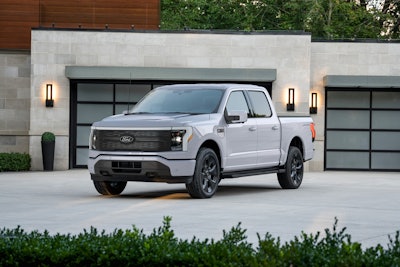
Did Ford short circuit its own electric vehicle programs? Announced in 2022 as a “Model T moment,” the Lightning was expected to revolutionize Ford. In 2023, I recall reading comments by Ford’s CEO that Ford was losing money on each vehicle and had missed the mark on the need to also promote charging systems. As noted by NPR, the Ford CEO promised that future vehicles would be "radically simplified," using different battery chemistry and more efficient manufacturing. Repeat buyers were critical. “The first people who buy our first-generation electrics are going to be the first people to buy our second-generation electrics."
Only there would be no second generation Ford EV. In 2024, the Ford CEO announced the next generation product would be delayed to at least 2028. Then in 2025, he announced the end of the Lightning product line entirely. The timing of the announcement meshes well with the political climate, but time will tell if ceding the electric truck market to Rivian, GM and Tesla in the U.S. and elsewhere will be a win for Ford, or just another self-inflicted wound.
Rivian, GM and Tesla built all-new designs for their electric trucks. GM with its trio of product lines — the Silverado EV, Sierra EV and Hummer EV — have the advantage of being clean-sheet-of-paper electric truck designs. Rivian and Tesla also are entirely new designs optimized for the companies’ product goals, although very differently.
Ford appears to have doubled-down on its laurels — internal combustion engined trucks — albeit with a commitment to make them range extended hybrid electric trucks in the future. How successful will Ford be at making an even more successful hybrid vehicle that has all the components of a pure battery electric truck compounded with all the parts of an internal combustion engine one?
And what will happen to Ford’s hugely successful battery electric delivery van, the E-Transit? Carefully sequestered away from Ford’s automotive line-up, will the E-Transit continue to make money for Ford or will it also become hybridized? And what of Ford’s international market? Didn’t they just introduce a new Class 8 battery electric tractor in Europe?
Does it feel a bit disingenuous to claim that electric trucks are not successful when they are concurrently being sold as great products? The iconic scene from the movie Casablanca comes to mind where Claude Rains announces that Humphrey Bogarts Café American is being shut down because “he’s shocked, shocked to find gambling going on.” And moments later, the casino manager hands Rains his gambling winnings.
Ford’s announcement that they are exiting the all-electric pickup market for a future hybrid-electric one certainly reflects Ford’s choices, but do they reflect the world-wide trends? Time will tell.