










In 1973, the price of oil skyrocketed 300% as a result of tensions with OPEC. There were long lines at gas stations, rationing, tapping of the U.S. strategic oil reserves and a newfound focus on efficiency, such as the 55 mph national speed limit.
But in retrospect, that spike in oil was like a magnitude 5.0 earthquake. I do not think I even woke up for 5.0 earthquakes when I lived in California. Now, the magnitude 6.9 Loma Prieta quake was an entirely different story.
The U.S. Energy Information Administration has great historical data on oil prices, as seen in Figure 1 (below). Note that the 1973 oil crisis hardly registers in the context of more recent volatility. According to the website Oilpri.com, there were eight major price shock cycles over the five decades leading up to Russia’s 2022 invasion of Ukraine. There are probably nine decades if counting the latest problems in the Persian Gulf that are not yet in the data.

Peaks and valleys in oil pricing are labeled as oil volatility. Fleets and original equipment manufacturers, or OEMs, have no real control over what happens to oil prices. Thriving businesses suddenly find their economics turned upside down because costs they cannot control have spiked. All fleets can do is hunker down and work with the cards they have been dealt — making their operations more efficient by looking at where every penny is going.
Fleets that excel at tracking all their costs can figure out how to survive the spikes. They can make smart choices regarding equipment and operations, such as making better use of existing truck systems like cruise control, or monitoring each driver’s fuel efficiency and coaching them to improve. They also can be more selective about which routes make sense and when to decline a job on an unprofitable route.
OEMs are slower to react to fuel price spikes. There is inertia to overcome in truck product planning. Sometimes OEM planning has insightfully projected fuel price spikes, allowing companies to improve products already in their development pipeline. At other times, they have been caught flat-footed and must scramble to get improvements into the product line. It can take months or years to develop, test and bring improved OEM products to production.

Get 80 tips to boost your fuel efficiency
Shippers mostly just have to ride out the storm of oil price volatility. Someone has to pay for fuel price spikes; consumers, shippers and fleets all share the burden to some extent. But shippers see it first because of fuel surcharges. As oil prices go up, surcharges help compensate the fleets so they are not the sole group affected by those price increases. The mechanism for passing on costs to the shipper is a bit slow, but ultimately the shipper pays for fuel price spikes. In turn, shippers and manufacturers pass on those costs to consumers through higher product prices.
Peaks in pricing seem to be followed by valleys, like a roller coaster ride. Many factors, again largely out of the control of fleets, go into those sharp drops in fuel prices. Sometimes it is the result of new technologies like fracking, new policies, recessions, pandemics or any of a thousand combinations of reasons.
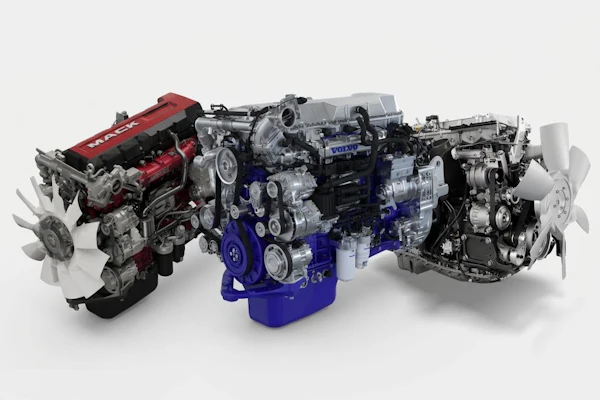
Fleets have been forced to ride the oil price volatility roller coaster for decades because diesel engines were the only game in town. Fleets have made some progress with the help of OEMs in reducing demand for fuel over the last two decades by producing, buying and driving more efficient trucks. The growth in the use of telematics also has provided better factual data on driving specifics, which are being mined for improvements. Still, all these technology and operational improvements have been in the context of fossil diesel, until recently.
What is changing is that fossil diesel now faces competition from renewable diesel, biodiesel, natural gas, renewable natural gas, battery electric, hydrogen fuel cell and even hydrogen internal combustion powertrains. Pricing of fossil diesel increasingly will need to compete with fuels that are largely independent of the oil dynamics that have dominated the industry for so long. Fleets have choices now.
Figure 2 (below), from the Federal Reserve Bank of St. Louis, highlights electricity and natural gas costs versus diesel costs since 2000. The roller coaster ride is clearly with diesel.

Businesses like predictability. OEMs are now providing more powertrain choices with more stable energy pricing. Competition for transportation energy eventually should help moderate oil price volatility as OEMs and fleets migrate to alternative powertrains.