










Renewable natural gas is providing immediate decarbonization for fleets, bypassing the need to wait for next-generation vehicle platforms or expanded charging grids.
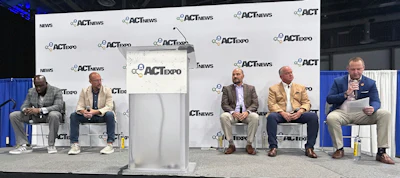
Commercial fleet operators and engine manufacturers are increasingly turning to natural gas solutions as a ready-now strategy for reducing carbon emissions, according to a panel of industry experts at ACT Expo in Las Vegas Tuesday.
Marc Rowe, director of sales for Love’s Travel Stops – Alternative Energy, moderated the panel, noting that while many future technologies are in development, Compressed Natural Gas (CNG) and Renewable Natural Gas (RNG) offer immediate, scalable benefits for today's heavy-duty fleets, despite a checkered past.
"We're hearing regularly about mixed experiences with legacy products, but we're super excited about the new (Cummins) 15-liter X15N product," Rowe said.
Imon Udeuhi, general manager of alternative fuels at Cummins, emphasized that natural gas technology is not new but has matured significantly over four decades. He highlighted the performance of the new X15N engine, which offers 500 horsepower and 1,850 lb-ft of torque—comparable to diesel performance—while using 10% less fuel than prior 12-liter versions.
"The 12-liter engine proved natural gas could play in this space," Udeuhi said. "The 15-liter engine makes it play with long-haul, heavier loads. It’s doing it right now; it’s available right now."
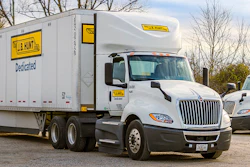
Paper Transport (CCJ Top 250, No. 105) Chief Commercial Officer Jared Stedl and J.B. Hunt Transport Services (No. 5) Vice President of Energy and Sustainability Jerrod Mounce discussed the "carbon diet" methodology, evaluating technologies based on carbon reduction per dollar spent.
"Typically, biofuels are very, very advantaged," Mounce said, "and with renewable natural gas being a biogenic fuel, on that scale, it's in the lower end of the spectrum of cost premium."
Both noted that RNG currently offers a better return on investment compared to hydrogen or battery-electric vehicles in many long-haul applications due to lower equipment premiums and mature infrastructure.

"Right now it just pencils out better on that cost per ton of CO2 just because the price premium of the truck is not as much as it is with an electric truck," Mounce added.
Paper Transport, who last year booked more than 5 million miles using RNG/CNG, has been running natural gas trucks for 15 years, "and really started off with the first edition," Stedl noted, adding early experiences were not easy.
"One thing that we've learned, really, is patience and making sure that there's recognition that the natural gas engine has been around a long time, but we hadn't deployed it in the way that PTI started to deploy it, really advancing it in the long-haul network," he said.
"As it relates to patience, one of the things that I've learned is getting the shippers—so we're going to work directly with the shippers and make sure that they understand the technology as well, that they're a part of the routes that you choose to deploy the trucks on," he added. "And of course getting the drivers' buy-in as well. It helps a lot when the truck drives just like a diesel truck does, and that's the experience that we've seen with the second-gen 12-liter and the 15-liter, certainly a little more so with the 15-liter."
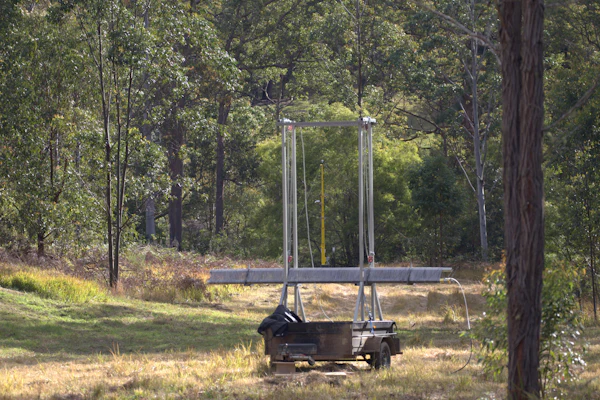
Infrastructure availability, a historical hurdle for gas-powered fleets, has also largely been overcome. Rowe noted that the network has matured exponentially over the last decade, with portable fueling technology now available to bridge gaps for specific routes.
Dave DeMoss, co-founder and executive leader of Midwest Logistics Systems, is operating close to 100 natural gas trucks. He underscored the importance of maintenance and training, advising fleets to ensure their facilities and technicians are properly equipped and certified to handle natural gas vehicles to maximize uptime.