










Trucking news and briefs for Tuesday, April 14, 2026:
Congress again floats $5 million liability insurance minimum
Last week, U.S. Reps. Jesús “Chuy” García (D-Illinois) and Derek Tran (D-California) reintroduced the “Fair Compensation for Truck Crash Victims Act,” which would increase insurance requirements for interstate motor carriers.
The legislation was previously introduced near the end of 2023 but never made it to a subcommittee vote. García has also previously authored the “Improving National Safety by Updating the Required Amount of Insurance Needed by Commercial Motor Vehicles per Event (INSURANCE) Act.”
The bill, which now has five co-sponsors, would:
- Increase the minimum insurance requirement for interstate motor carriers from $750,000 to $5 million, which García said “accurately accounts for inflation and the current cost of medical care and other expenses.”
- Indexes the new minimum requirement to inflation to ensure “that financial protection for crash victims does not erode over time, keeping pace with the rising cost of health care and other expenses.”
“It is unacceptable that outdated minimum insurance requirements continue to leave victims without the support they need to cover medical care and losses,” García said. “The Fair Compensation for Truck Crash Victims Act would help address this by ensuring trucking companies carry adequate insurance to cover the high costs of the devastating accidents their trucks can cause.”
According to García, the bill has been endorsed by the Institute for Safer Trucking, American Association for Justice, Truck Safety Coalition, Citizens for Reliable and Safe Highways, Parents Against Tired Truckers, Road Safe America.
In a report to Congress last month, FMCSA acknowledged that “in the rare instances that fatal and severe/critical injury crashes do occur, the costs of resulting property damage, injuries, and fatalities can exceed the minimum levels of financial responsibility.” The agency added, however, that it doesn’t have access to enough information and data to justify an increase to the liability insurance minimum.
[Related: Liability insurance hike? FMCSA lacks data to justify new minimum]
Turn signal issues prompt Volvo, Mack recalls
Volvo Trucks North America and Mack Trucks have each issued recalls for trucks in which the turn signals may not function properly.
National Highway Traffic Safety Administration documents state that the affected trucks may be equipped with software that does not provide adequate current to support incandescent trailer turn signal indicators. As a result, the affected trucks do not comply with the requirements of Federal Motor Vehicle Safety Standard number 108, "Lamps, Reflective Devices, and Associated Equipment."


Volvo’s recall includes approximately 336 model year 2025-’27 Volvo VNL and 2026-’27 Volvo VNR trucks. Mack’s recall includes approximately 86 model year 2025-’27 Mack Pioneer units and 2027 Mack Anthem trucks.
Dealers will update the turn signal indicator software, free of charge. Owner notification letters are expected to be mailed May 31, 2026. Owners can contact Volvo Trucks' customer service at 800-528- 6586 with recall number RVXX2604. Owners can contact Mack's customer service at 1-800-866-1177 with recall number SC0493.
NHTSA’s recall number for the Volvo recall is 26V-208. NHTSA’s recall number for the Mack recall is 26V-207.
New inland port set to open next month in Georgia
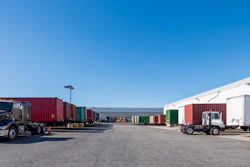
The Georgia Ports Authority announced in March that its new inland port in Gainesville, Georgia, will open May 4.
The opening of the new inland port “will strengthen Northeast Georgia’s attractiveness and business competitiveness,” GPA said.
With a direct connection to Savannah’s 40 ships per week global ocean carrier network, local manufacturers – including poultry, heavy equipment, and forest product companies – can reach international markets more efficiently, the authority added.
Direct rail with five day a week service between Northeast Georgia and Savannah also gives shippers an alternative to a 600-mile roundtrip truck route that will reduce trucks on Georgia’s highways and in the Atlanta region.
“Our new inland rail facility in Gainesville, Georgia, will significantly offset truck traffic congestion in Atlanta and improve air quality by replacing an estimated 26,000 truck roundtrips in the first year alone,” said Georgia Ports President and CEO Griff Lynch at the March 24 GPA Board meeting. “We’re already seeing positive customer engagement, and Norfolk Southern will bring an excellent level of service working together with GPA.”
At full build-out, the $134 million Gainesville Inland Port (formerly known as the Blue Ridge Connector) will have an annual capacity of 200,000 containers.
To reduce the new railyard’s traffic impact on local communities in Gainesville, GPA funded $4.8 million in Hall County projects, eliminating an at-grade rail crossing, rerouting White Sulphur Road and surfacing Cagle Road. The new White Sulphur route south of the inland terminal ensures free access for emergency vehicles and avoids traffic disruption from trains.