













Fuel costs are brutal right now. Every fleet operator in America is watching the pump prices tick upward and doing the math on what it means for their margins. It’s a rough moment to be running trailers.
Here’s the thing, though: not all of that pain is coming from the price board at the fuel stop. Some of it could be attributed to your tires, and that part you can actually do something about.
The tire problem nobody’s talking about

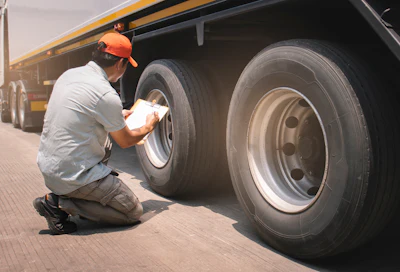
Here are the numbers: a tire running 10 PSI low burns 2–3% more fuel per mile (U.S. Department of Energy). Get to 20–30 PSI underinflation and field testing puts that fuel penalty at 8–10%. It adds up fast. With diesel hovering around $5.33 a gallon right now, a fleet running thousands of trailers could be hemorrhaging hundreds of thousands of dollars a year from underinflated tires alone.
And it’s not rare. According to FMCSA data, 55% of commercial vehicles have at least one tire running 10 or more PSI below optimal. One in five tractors has a tire underinflated by 20 PSI or more. On trailers, where tires go the longest without anyone laying eyes on them, the problem is even harder to catch.
Why trailers are the blind spot
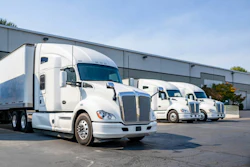
Tractors get all the attention. Drivers walk around them, mechanics see them, but trailers sit in yards, get dropped at docks, and spend days or weeks disconnected from anyone who might see a problem. Most transportation management systems (TMS) can tell you where a trailer is and whether it’s available for a load. What they can’t tell you is whether it’s safe or healthy for dispatch. By the time a tire issue becomes visible, you’ve already lost money and you may be heading toward something worse.
According to NHTSA, tires underinflated by more than 25% are three times more likely to contribute to a crash. Blowouts mean roadside service calls, delays, risk to cargo, and potentially unsafe conditions. All of it is expensive, stressful, and largely preventable.

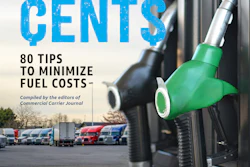
Get 80 tips to boost your fuel efficiency
The frustrating part is that the technology to catch these problems already exists. Most fleets just haven’t deployed it on the trailer side yet. Only about 15% of trailers have TPMS installed, compared to 25–30% of tractors (NACFE). That gap is where the money is going.
Real-time visibility changes everything
This is exactly the problem trailer TPMS solutions were built to solve. Fleet operators can get trailer tires insights on pressure and temperature data every three minutes and alerts the moment something changes. They don’t have to wait for a driver to do a walkaround or a shop tech to pull a trailer in. If a tire starts losing pressure in the middle of the night at a drop yard, the system alerts the fleet operator and forwards the information to the TMS so that the load can be reassigned to a safe trailer before operations is impacted.
Trailer TPMS sensors install quickly and easily, and if they’re energy efficient and offer a good warranty, they can live on your trailers for the long haul.
The FMCSA studied the impact of TPMS across tractor-trailer fleets and found a 1.4 to 1.8% improvement in fuel economy. On fleets running a million or more miles a year on each trailer, that’s a meaningful number, especially when you layer in the avoided blowouts, extended tire life, and reduced roadside service calls.
No one got into trucking to spend their days fighting fuel prices and chasing tire problems. The last thing fleet operators need right now is another thing to worry about. The fleets that come out ahead on fuel this year won’t just be the ones watching the pump — they’ll be the ones looking a little closer to home.