










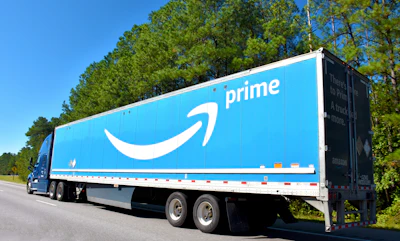
Amazon, valued at $2.5 trillion, is the fifth-most-valuable company in the world and the world's second-largest retailer. But as a trucking company, it still has a way to go.
The Seattle-based e-commerce behemoth originally launched less-than-truckload services in 2019 exclusively for its selling partners to move inventory into the company's fulfillment network. It announced last week that it is expanding its LTL shipping service to all businesses, stepping into a competitive market long dominated by century-old legacy carriers and logistics giants.
Despite the head start held by established players, an Amazon spokesperson confirmed to CCJ that its LTL network rollout is nationwide, and noted that an ongoing boom in demand for less-than-truckload freight has created enough market opportunity to support multiple successful transportation providers.
Amazon Freight Director Jim Ruiz told CCJ that tens of thousands of Amazon's selling partners have used the shipping service over the last seven years before the company decided to open it to the public.
"For years, customers told us their LTL freight never matched the reliability and visibility of their full-truckload shipments," Ruiz said. "We built an asset-backed LTL service that closes that gap—flexible same-day and next-day pickup, real-time shipment tracking from dock to door, and dedicated LTL-trained drivers."
The move positions Amazon to compete in a tight freight landscape. Established LTL carriers like Old Dominion Freight Line (CCJ Top 250, No. 9), Saia (No. 18) and FedEx Freight (No. 1) have expansive national networks, operating from 200 to 300 shipping terminals—roughly 10 times the terminal infrastructure of Amazon’s current LTL footprint.
To offset what it it may lack in physical infrastructure, Amazon is leaning into where it shines most: its technology and existing supply chain infrastructure.
The company’s LTL service features a unified drop-trailer pool that allows businesses to manage both partial and full truckloads in the same yard.
According to the spokesperson, the company is also targeting traditional industry pain points by replacing manual tracking with digital tools. The service features real-time GPS tracking from origin to destination, automated delivery appointments and electronic proof of delivery.
Flexible brokerage-like business model
Amazon has deployed cargo cameras and door sensors monitored by a centralized system to send automated alerts to drivers and secure freight across its fleet of 80,000 trailers and 24,000 intermodal containers. The spokesperson noted that Amazon Freight contracts with a subset of carriers for pick up and delivery—drivers with expertise in LTL operations and have the ability to manage multi-stop routing and complex dock procedures
Shippers can also integrate automated order tendering, tracking and invoicing directly into their existing supply chain networks through electronic data interchange systems.
The tech giant also offers several scheduling options to attract shippers, including daily pickups for high-volume companies, same-day drop-trailer options and next-day live pickup for orders placed by 5 p.m.
Amazon is marketing the freight service to businesses of all sizes, avoiding a strict focus on either corporate contracts or the flexible spot market. The company said shippers can negotiate contract pricing through a sales representative or buy capacity at spot-market rates through Amazon’s online self-service portal.