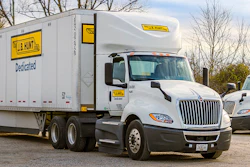
Truck parking consistently ranks as one of the trucking industry's top concerns. In the American Transportation Research Institute's most recent report, it was the No. 4 overall issue and No. 2 for drivers.
Knowing there's a problem is part of the solution, but there also needs to be data to back it up. A new report from Altitude by Geotab offers just that, providing insights into parking events from commercial vehicle telematics data.
Altitude by Geotab's "A Nationwide Study of Interstate Ramp Parking" report found 2.2 million observed truck parking events on highway ramps during the one-year period of Nov. 1, 2024, through Oct. 31, 2025.
Contents of this video
00:00 10-44 intro
00:25 Study of interstate ramp parking
02:04 Data on trucks parking on ramps
03:29 Safety risk for the truck driver and the motoring public
04:49 Freight corridors and ramp parking
06:13 Route planning, hours of service and truck parking
07:59 $200 million designated for truck parking
Matt Cole:
How often truck drivers are parking on ramps instead of dedicated parking spaces and what can be done to solve the problem?
Jason Cannon:
Hey everybody, welcome back. I'm Jason Cannon and my co-host is Matt Cole. Truck parking consistently ranks among the trucking industry's biggest concerns and the most recent critical issues report by the American Transportation Research Institute truck parking shortage was the number four overall issue ranked number two for truck drivers.
Matt Cole:
Just knowing that a problem exists isn't often enough to make positive changes happen. To get government and private entities to spend real money to address truck parking, there needs to be data to back up the claims. A new report from Altitude by Geotab provides just that.
Nate Veeh:
Really the report is understanding at a national level where some of the on-ramp stops parking events are occurring from these trucks, specifically Class eight trucks to heavy trucks. And so we were really interested in doing this. We hadn't done it at this scale before. We've seen working with different states, departments of transportation or other planning authorities that there are issues with truck parking. Many times different states are required to go and do truck parking studies every couple of years, two to four years in their freight plans. And so we've gone through and decided to go back and see, okay, how bad and how persistent is this? There's a lot of anecdotal information that comes across. And so because we have this really huge data at our fingertips, we're able to go back and get a proxy and understand where these parking events are occurring and whether or not they're anomalies or if it's persistent across the nation. And there hasn't really been, I would say, as robust of a data source historically as altitude to go and do this because we do have about one in three connected class eight truck tractors under management today. And so we can get a really good pulse on how kind of the economy, how the fleet moves. And so we just wanted to go back and really take a look to see where this is occurring, where the habitual kind of issues are throughout the nation.
Jason Cannon:
As Nate mentioned, there's plenty of anecdotal evidence of trucks parking on ramps, and we all see it happening when we drive down the interstate. But what does the data show?
Nate Veeh:
It's persistent. It's every single day. It's thousands of times a day. When we did the analysis on the study, we saw 2.2 million observed truck parking events on, on-ramps throughout the last year again, so we're about, I would say 30% of the market share. So when you scale that up, you're looking at about 6 million events every single year where a Class eight truck is parked on ramp there, but all different types of durations from short stops to some very long duration, nine to 12 hours. So what I would say is one of the biggest issues that drivers face is really the hours of service regulations and time limits that they're forced to abide by. So they have to stop and they have to rest. I think it's after every 11 hours. And so because of that, they wish that they did have infrastructure to support it, but really because of all the freight demand over the last really decade and so on, there's been a lack of infrastructure keeping up. And so maybe it's been a bit neglected or different agencies just didn't really know where to look or how to look for it appropriately. And so combining hours of service with lack of infrastructure, by default, these drivers are forced to go and find areas where they have to park, and it's always not the most convenient. So on-ramps are an easy kind of decision to do when there's lack of space from other areas that are, I would say more authorized for them to park at.
Matt Cole:
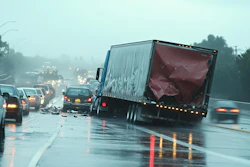
In addition to the inconvenience of parking on a ramp, doing so also creates a major safety risk for the truck driver and the motoring public.
Nate Veeh:
I mean, it's pretty clear, especially if you have 6 million events. So that's every single ramp that you probably think of off the interstate. It's getting trucks, parking there every single day. From a safety perspective, I believe F-M-C-S-A had mentioned that there was about 4,000 injuries accidents that annually happen because trucks are parked either on an on-ramp or along the interstate. So that's 4,000 injuries. It's not even considering the almost misses and things like that. Also in the national highway, NTSA indicates that about 300 people I think, and there's dust that occur from it as well. So it's very, safety is probably the biggest factor here considering weather events or nighttime driving when you have passenger vehicles that are also getting off of these on-ramps to go to gas stations home, wherever, they might always not be the most visible. Sometimes there's obviously trailers that hang over the bit of the side of the road. And so from an safety implication, I mean it's huge. Obviously I think the drivers don't want to park there more so forced to park there because of the lack of capacity. And so the stress that kind of puts on them as well. It's not a good thing that's obviously happening. And so the data is kind supporting that this is a habitual, it's happening, it's a massive safety issue. If things don't get a little bit better here
Jason Cannon:
Now, it probably doesn't come as a surprise, but some of the most population dense states and cities and the busiest freight corridors have the most on-ramp parking occurring.
Nate Veeh:
So I'll give you the top five states and the top five cities of what we're seeing. So the states that observe the most kind of long-term, call it long duration parking on on-ramps, you have Indiana, you have Illinois, Tennessee, California, and Pennsylvania. Indiana is really interesting. I think it's the crossroads of freight for America. It's kind of what it's labeled as well. So there's about four different interstates that converge there, and there just hasn't been the infrastructure to keep up on that. Other states like Tennessee, they see massive population people that are deciding to leave other states to move there. And so because of that economic growth, warehouses, distribution centers are opening up. California is obviously a very large economy in itself, and so a lot of freight here, a lot of density in LA County where I personally live, and it just hasn't been, from what I've seen, the support to keep up with the infrastructure to have these bots for trucks to park for long periods of time. Now, on the top five cities that have the worst, I would say on-ramps, you have Atlanta, Indianapolis, New York City, Washington DC and Los Angeles. So I don't think maybe that's overly surprising because they are very large metro areas typically supported by urban planning and things of that nature, and not always focused on the big class eight trucks that are moving goods, which are inevitable.
Matt Cole:
Parking on a ramp can sometimes be out of a driver's control if nearby designated spaces are full and hours of service limits are in play. But route planning can go a long way toward cutting down on that ramp. Parking.
Nate Veeh:
That's tough, right? That's a tough one to say. As a driver, I wish I had an answer that I could say, if you did this, you'll get that as a driver. But a lot of it is unfortunately out of their control in terms of the infrastructure that is built to support them. Now, I will put that with a caveat that if you are small mid-size fleet that has a fleet manager, maybe some analysts on the backend, there's data available through the likes of altitude that you can go and understand where some of the worst capacity issues are actually occurring, where there's ones that have space at what times of the day, how often trucks are parking and for how long they're parking for. So that is you're planning your routes. You could say, okay, well I know this spot here, this rest stop is always has persistent issues.
If my driver arrives at 9:00 PM they're going to be out of luck and they have to park on an on-ramp or other areas. But if they drive another 30 miles, there's an area that has more capacity. It's not always filled. So using the data to better plan the routes for the drivers if they have the luxury to do that, is something that I can definitely say that would be beneficial for the drivers. And the only other thing I could say is as a driver, there's other apps I know that are out there like truck parking club and others that are working with other types of asset owners, typically real estate like a distribution center, a warehouse center that may have capacity, and they start doing programs similar to an Airbnb where we'll lease our spots for you. So looking at alternatives like that, where they may be made available in the short term would be something that I would recommend looking into as the government and other private entities start scaling up, the ability to add more infrastructure to support it, so where they don't have to think about the issues of the parking.
Jason Cannon:
Congress just passed its fiscal year 26 appropriations legislation, which for the first time included $200 million designated specifically for truck parking altitude hopes. Its new report can be used to help prioritize where that funding should go.
Nate Veeh:
I'll start at the top, which is that the federal government, we do quite a bit of work with them on different areas within Geotab and Altitude, but there's programs in place that the federal government has looking at performance measurements for travel time reliability. And so they'll say, okay, each state you have to report to me on an annual basis or monthly basis how travel times operate and are there levels of congestion, and if so, how do you improve that? So I think that's a really good thing to use as kind of a playbook for truck parking. So it could also be things that the federal government should consider in terms of understanding not just the activity on the road, but what's happening on the side of that too, and have performance measurements that are put into place that states should abide by to understand if they're facilitating parking needs and safety needs to support the growth of the economy from freight as well.
Looking at that. And then also setting aside funding at the federal level that they can pass down to state dots or other agencies to actually go out and implement this and execute on building or acquiring spots that support truck parking. Something that I would say the feds would look at. So at fleets, you can use a report that we generate by altitude, share that up to different policy makers and say, Hey, this is not just a one area thing. This is happening nationally and this is where it's happening. The worst as a supporting documentation. So from a state level, I would say it's a little bit more tactical. Again, I don't think it's the state's fault that they haven't had really a good data source yet to go and understand. It's a lot of anecdotal feedback to them, but now there's insights that they can use to be more tactical and strategic as to where to go and deploy once you have funds to go and build infrastructure as well to support that.
So it's going to be all throughout the state. This is not just an isolated area, but there will be the worst areas for sure. So understanding where that is, the habitually the worst, and having data to support it to go and get the funds to build and execute on that is what I would recommend to state dots. And then on the private sector as well. So you think of some of the major asset owners out there that are supporting fleet movement. You look at Pilot flying JS or Loves or ta, and so using this to optimize their networks, build new sites, maybe broaden some of the parking to support some of the burden as well to offload that and being really strategic as to where this is happening. To optimize the network obviously helps their business, but also helps the drivers. And then again, other programs where you're a real estate owner and you want to lease some of these areas make a little bit of additional income if you have a paid for parking program. So there's a few different ways to go about it, but it's definitely not just the federal government's issue to deal with. They should take lead on that, I think, but also working across different municipalities, agencies in the private sector as well to help support it is what my recommendation would be here.
Jason Cannon:
That's it for this week's 10-44. You can read more on ccjdigital.com. While you're there, sign up for our newsletter and stay up to date on the latest in trucking industry news and trends. If you have any questions or feedback, please let us know in the comments below. Don't forget to subscribe and hit the bell for notifications so you can catch us again next week.