










Trucking news and briefs for Friday, Aug. 21, 2026:
PE firm launches transportation business
Private equity firm M&T Capital Partners has launched RTB Holdings, which will serve as the parent umbrella company for its growing multimodal transportation and logistics platform.
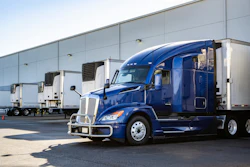
The platform is anchored by Alabama Motor Express, a Dothan-based truckload carrier and brokerage operating more than 500 tractors and 2,000 trailers. M&T established RTB in partnership with AMX’s founding family, the White family, who will remain active in company operations.
RTB Holdings will function as the externally facing parent entity for AMX, subsequent acquisitions and future logistics investments.
The company is scaling through organic growth, technology investments and strategic acquisitions across truckload, brokerage, dedicated fleets, warehousing and managed logistics.
As part of the launch, RTB announced the acquisition of JIT-Ex, which now operates under the RTB umbrella to expand asset-based capacity in Tennessee freight markets including Memphis and Nashville. RTB also rolled out AMX Expedited, a new division focused on time-sensitive cargo.
"Our objective is simple: build upon what AMX already does exceptionally well while expanding the solutions we offer customers," said Ryan Tripp, chief financial officer and vice president of RTB Holdings.
Oregon touts benefits of online permitting system after first year
A new web-based, self-service permitting system for motor carriers moving over-dimension loads through Oregon has created $940,000 in savings in its first year of operation, the state announced this week.
The Oregon Routing Information Online project, better known as ORION, went live in May 2025.
A typical 18-wheeler is about 9 feet wide, 13 feet tall and 70 feet long. Over-dimension loads can be 12 to 16 feet wide and reach heights of 18 feet or more. Superloads can exceed 150 feet in length, with weights upwards of 250,000 pounds or more. Any vehicle that exceeds legal vehicle dimensions and weight must get an over-dimension permit.
“The movement of freight is essential to commerce in Oregon, and the amount of over-dimension traffic on our roadways increases every year,” said ODOT Commerce and Compliance Administrator Carla Phelps. “Ensuring these over-dimension loads can travel through the state without incident is critical to the safety of the traveling public, commercial drivers, and Oregon roads and bridges.”
Before ORION went live last year, the over-dimension permit process was labor intensive and time consuming, ODOT said. Permit analysts used paper maps and attachments for guidance on which routes were best depending on the weight, width, length and height of the load. They also used an electronic routing manual to verify vertical clearances, weight restrictions and temporary restrictions along each state highway.
Now, all of that information has been programmed in the ORION system and is regularly updated. Commercial carriers with an active registration/tax account in Oregon can enter their vehicle information — including weight, length, width and height — and their start and end points. ORION analyzes all the information and provides the shortest, safest route.
There are still certain load or route criteria that, when triggered, require additional review and approval from analysts and road authorities. However, that process has been greatly automated, sending emails to the road authorities, letting them know they have a permit to review in ORION.
“ORION has allowed our staff to shift their focus to the largest and more complex loads that require extensive coordination and careful safety review,” said Phelps. “This modernization project eliminated the need to fill seven currently vacant positions, which helped fill the budget gap left by a struggling State Highway Fund.”
Some benefits from the first year of ORION, according to ODOT, include:
- 45% of single-trip permits are now self-issued by customers on the spot
- Call volume has decreased by nearly 50%
- Customer wait times have been reduced by more than 80%
- A significant decrease in paper-centric processes; permits are now stored and retrieved electronically.
- Automatic updates to TripCheck, giving carriers immediate access to current conditions and improving roadway safety.