










As the market moved into model year 2027 ordering, FTR and ACT Research pointed to regulatory uncertainty as the main drag on normal seasonal buying of Class 8 truck orders.
FTR pegged preliminary net orders at 21,300 units in September, up 18% from August and 3% from a year ago. ACT Research reported 18,700 units, down 9.5% year over year.

Following three consecutive quarters of contraction, the U.S. commercial trucking sector rebounded in Q3, welcoming close to 10,000 new prospective fleets and over 229,000 units of verified equipment, according to the RigDig database. New vehicles drove the primary growth within the U.S. trucking sector during the quarter ending last month.
FTR noted that September’s month-over-month gain was smaller than the seasonal norm but said underlying demand stayed fairly solid, citing fleet replacement needs, tight capacity and firmer freight rates. Year-to-date orders through September totaled 263,499 units, up 95% from a year earlier, with orders totaling 351,244 units over the past 12 months.
“The 2027 regulatory engine transition is clearly impacting order seasonality this year, but the underlying demand for new equipment remains robust, supported by strong spot rate momentum,” said Carter Vieth, research analyst at ACT Research. “Fleets are eager to replace aging equipment and prepare for cost increases on the horizon, but the lack of regulatory clarity is making it difficult for them to plan effectively.”
September normally marks the start of order season, but ACT noted that some OEMs have not fully opened their 2027 order boards, disrupting the usual pattern. Looking ahead, the firm expects the Class 8 backlog to decline from August’s level when full September data are released in mid-October.
FTR noted similar sentiments, pointing out that September marks the transition month to MY 2027 ordering. The EPA 2027 NOx pre-buy has ended, and surcharge-free MY 2026 build slots are sold out. FTR believes some OEMs may have closed their MY 2026 order boards by early-to-mid August before opening MY 2027 books, which could have pushed some deferred orders into September.

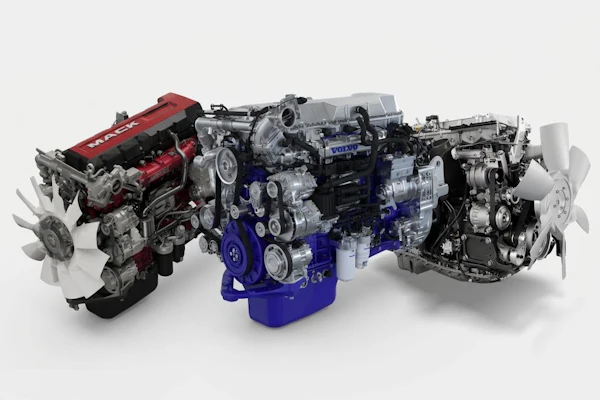
The month also reflected OEMs’ differing paths to 2027 NOx compliance and influenced fleet order activity, including whether OEMs plan to use nonconformance penalties (NCPs).
[RELATED: Detroit readies rollout of new 2027 engines]
Pricing brings uncertainty
With MY 2027 order books opening before the EPA has finalized regulations, pricing could still change. Until costs and rules are settled, FTR said orders over the next month or two could stay near year-ago levels, when tariffs and emissions regulations were shaping demand.
“With the EPA 2027 NOx pre-buy now complete, attention is shifting to MY 2027 engine choices and costs,” said Dan Moyer, senior analyst, commercial vehicles at FTR. “EPA’s July proposal would reduce some transition risk by allowing NCPs, emissions credits, warranty relief and other compliance flexibility.”
Moyer estimated that for Class 8, NCPs could result in a $6,000 to $7,000 fleet pass-through, while a fully compliant engine would carry an estimated upcharge of $8,000 to $12,000.
“Truck and engine manufacturers have announced varying strategies for handling the emissions transition, and some have not yet made their plans clear,” Moyer said. “The final EPA rule could still materially alter the economics of these strategies. Higher NCPs would narrow the cost advantage of current-generation engines while lower NCPs would make that pathway more attractive.”
He added that the issue, along with other changes, could affect 2027 engine availability, fleet acquisition costs and the mix of technologies ultimately selected.