










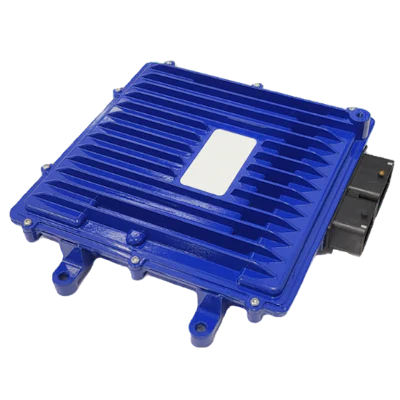
New Eagle, a developer of embedded control systems for autonomous and electric vehicles, announced the release of the OpenECU NX3 on Monday at ACT Expo 2026 in Las Vegas, a control platform designed to centralize electric vehicle architecture.
The NX3 is the industry’s first single-controller solution to integrate both Megawatt Charging System (MCS) and Combined Charging System (CCS) protocols with full vehicle supervisory control. By combining these functions, New Eagle aims to eliminate the need for multiple independent controllers, reducing wiring complexity and potential failure points in commercial electric vehicles.
The launch follows New Eagle’s recent acquisition of Pi Innovo, an expansion that bolstered the company’s hardware and software engineering capacity.
Kevin Alley, New Eagle chief commercial officer, said the OpenECU NX3 is designed to simplify vehicle control systems architecture by "eliminating multi-controller complexity and delivering a single, production-ready platform that accelerates deployment of next-generation EV systems."
As the commercial EV market scales, manufacturers have faced rising costs and integration risks associated with "multi-box" architectures. The NX3, the company claims, allows original equipment manufacturers (OEMs) to consolidate powertrain, charging, and auxiliary functions into one unit.
Built on New Eagle’s Raptor toolchain, the NX3 supports model-based design and C-code workflows. Key technical specifications include:
- Dual-inlet charging: Support for MCS and CCS from a single unit.
- Safety compliance: Designed to meet ASIL-D functional safety standards.
- Cybersecurity: Meets ISO 21434 requirements for vehicle security.
The company also introduced several other products to its portfolio, including a standalone Charge Control Unit (CCU) and the DLC-12 driveline solution. These additions are intended to support a range of applications from early-stage development to mass production in the hybrid and clean-fuel sectors.