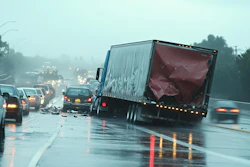











Real-world unpredictability and failures are necessary learning tools and controversial measures like DEF system derates are critical diagnostics rather than pointless bureaucracy.
- Experience Over Theory: College degrees provide basic tools, but true engineering wisdom comes from scar tissue, hands-on production line exposure, and learning from real-world failures.
- Unpredictable Reality: No amount of initial testing or AI knowledge can account for every real-world variable, as proven by historical aerospace, infrastructure, and automotive failures.
- Purpose of DEF Derating: Though frustrating to operators, diesel exhaust fluid (DEF) derates were mandated active safeguards to prevent vehicle damage and enforce emissions compliance.
- Value of System Warnings: As active derating is phased out for basic warning lights, drivers must remember that diagnostic warnings exist to flag critical issues before catastrophic failure occurs.
Engineering jobs constantly evolve. When I started my career more than four decades ago, I knew I didn’t know much. Sure, I had graduated from college as a mechanical engineer and knew my way around calculations. But there was such a massive void in my actual product knowledge. In looking for employment, I focused on organizations where I felt I could rapidly get broad experience — companies that had programs that moved people around rapidly between departments to get them quickly up the real-world learning curve.
Engineering jobs come in a lot of flavors. What they all share in common is that the job requires continuous learning. The world is pretty tough on engineers — it is unrelenting in exposing errors in judgment, inexperience, and mistakes.
Stuff happens. A missile launches and suddenly corkscrews immediately after leaving the water; a frozen O-ring does not expand fast enough and leaks hot gasses; a piece of ice shatters a supposedly sturdy carbon carbon leading edge; a dam is built on supposedly stable soil; or an elevated freeway viaduct is built to early standards that later evolved. Failure is one of the major mechanisms that makes engineers improve. Failure is part of what can be collectively called experience.
There is a reason you pay more to hire an experienced engineer than a person right out of college. You are paying for years of scar tissue.
One of the best learning experiences for engineers is being on the production line. You gain an understanding of how your product actually gets installed and interacts with everything around it. It can be a brutal, humbling moment when the assemblers on a busy production line go to drop an engine into a vehicle and find out it doesn’t fit. Or when a line worker goes to plug in a harness and finds out both ends are male. Or when the diesel exhaust fluid (DEF) system on a brand-new truck derates on a short trip immediately out of the factory for a test drive.
What AI advocates fail to realize is that the real world is pretty unpredictable. All the past experience in the world and the body of knowledge to date are still insufficient to deal with the complexity and unpredictability of the real world. Even smart people and brilliant companies have failures.

The root cause might be something as simple as overreliance on a single critical system, such as having one lone angle-of-attack sensor on a commercial jet. Or failure to understand how ice can impact sensor readings in flight, or how ice affects flight in general when flying a plane in severe weather. Or when two companies working on a critical system are unknowingly using different measurement systems, as has occurred multiple times on failed spacecraft.
Trucking has seen its fair share of major and minor failures. The original launch of antilock braking systems is an obvious example. There are quite a few examples found in the National Highway Traffic Safety Administration’s truck recall notices over the last several decades where the root cause could be traced to poor engineering.
After nearly every failure, some effort is made to understand it, blame it on something or someone, put in some remediation methodology, and then move on. After the Challenger accident, a lot of remediation steps went into processing and decision-making for the Space Shuttle program. Some shortsighted people might have labeled that as bureaucracy, but those steps were genuinely intended to prevent a future failure. Some years later, another catastrophic failure occurred with Columbia, compounded by perhaps more failures in judgment. Ultimately, the remarkable shuttle program was ended.
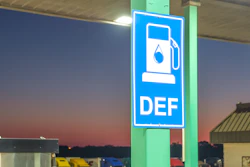
DEF system derating on trucks is a popular target for dart throwers. Engineers at multiple companies have spent a great many years trying to make DEF systems work, trying to make them robust and reliable. They also had to address things like DEF quality, purity, and age — all of which can impact how the emissions system works.
DEF has a shelf life. It has storage temperature constraints. It has purity requirements. Then there are users in the real world who might substitute other liquids for certified DEF. The initiative and creativity of customers should never be doubted — if it can be done, it will be.
DEF derating is, in part, a regulatory need to make sure someone isn’t trying to defeat the emissions system by substituting another product for DEF or modifying operations to bypass the system. It was a somewhat draconian solution that the original equipment manufacturers (OEMs) were mandated to put in place.
I had a new-model truck going directly from the factory to be demonstrated by a fleet located less than 50 miles away. The truck derated along the way and finally shut down altogether before getting to the fleet. It got towed back to the factory after limping into the fleet’s yard. It took some time for the engine experts to figure out what caused the DEF injector to form crystals and block flow. All the laboratory and track testing had not surfaced that failure mode. Months later, after analysis and more testing, the problem was resolved and production resumed.
That regulatory reason for DEF derating was because something was failing. Like the canary in the mineshaft testing for air quality, DEF derating highlighted that something was wrong and needed to be addressed. It was an indicator, like the warning lights or messages on a dash display, but rather than just warning, it actively did something to prevent further damage to the vehicle.
I guarantee that very few people know instantly what the root cause of a failure is. The National Transportation Safety Board (NTSB) spends months and sometimes years reconstructing and analyzing airplane, train, ship, and truck accidents because they are complex. Instantaneous claims of cause rarely turn out to be accurate.
With commercial airplanes, all too often, the instantaneous easy claim is pilot error. It can take years to clear the reputation of a pilot after the NTSB investigation concludes that an engineering or maintenance issue caused the crash.
DEF derates are a symptom of a problem. Like all the symptoms that might exist tied to having colon cancer, think of DEF derate, if you will, as a colonoscopy. It isn’t the root cause of the problem, just a mechanism for noticing that there is a problem.
Deferring maintenance on emissions systems assumes you have some prescience on the entire vehicle — more than all the engineers at all the OEMs who have helped develop the systems over years and endless testing in engine test cells, on tracks, and with fleets. God bless you for being smarter than they are.
Now that derating is being eliminated, I expect there will be only warning codes and warning lights. Just remember that those lights are also known as "idiot lights" for a reason.