










Daimler Truck North America is pushing out a software update to roughly 330,000 of its engines, easing speed-limiting safeguards in response to revised federal environmental guidelines.
The software update alters Diesel Exhaust Fluid (DEF) inducements—built-in vehicle safeguards that limit a truck's speed and power if the emissions system malfunctions or runs out of fluid. Under the U.S. Environmental Protection Agency’s revised guidance, issued in August 2025, the final speed limit for a truck in inducement mode will increase from 5 mph to 25 mph.
Commercial trucks rely on Selective Catalytic Reduction (SCR) technology, which injects DEF into the exhaust stream to convert nitrogen oxides into nitrogen and water. While emissions compliance remains legally mandatory, the updated software aims to prevent drivers from being stranded on highways at slow speeds.
Additionally, the time allowed for drivers to fix component-related issues before the vehicle enters final inducement has been extended to 8,400 miles or 160 hours. The parameters for low DEF tank levels will remain unchanged, DTNA said.
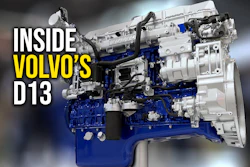
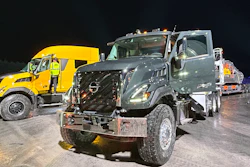
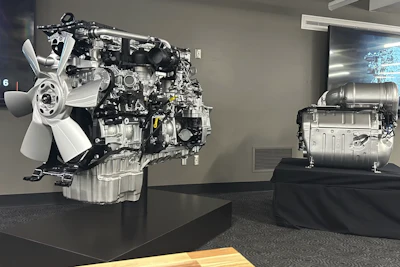
New Freightliner and Western Star models equipped with Detroit engines are already shipping with the updated software. The company started pushing the update, which requires a hard plug-in via diagnostic link, to approximately 330,000 in-service vehicles in February, targeting model year 2021–2025 DD15 engines and model year 2022–2025 DD13 engines. The rollout is expected to continue through the rest of the year.
The changes drew praise from federal small-business advocates who argue that overregulation and overly sensitive emissions sensors have unfairly penalized independent operators.
"For too long, small businesses like farmers, truckers, and construction workers have borne the cost of unreliable DEF systems through expensive repairs and needless downtime," said Kelly Loeffler, administrator of the U.S. Small Business Administration.
Loeffler said the SBA had been pressuring manufacturers to adopt the EPA's revised guidance, calling DTNA’s rollout a "common-sense step that gives operators greater reliability while reducing costs."
Additional DEF reforms
EPA in May said it was dropping the requirement for diesel exhaust fluid (DEF) sensors as part of a truck's aftertreatment system in favor of monitoring actual emissions, and catalyst efficiency. The EPA’s updated guidance, announced Friday, allows truck manufacturers to bypass sensors that monitor the quality of DEF. Under previous regulations, if these sensors detected poor fluid quality—or if the sensor itself malfunctioned—the vehicle’s engine would derate, limiting speed or forcing a full shutdown to ensure emissions compliance.
The Diesel Truck Liberation Act, a bill working its way through both the House and Senate, similarly would prohibit federal agencies from requiring manufacturers to install emissions control devices or onboard diagnostic systems and would retroactively protect individuals prosecuted for tampering with such equipment.