










Trucking news and briefs for Monday, Aug. 3, 2026:
U.S. cracks down on Mexican trailer imports
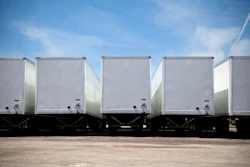
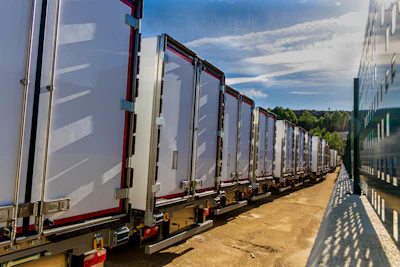
The U.S. Department of Commerce has imposed preliminary antidumping duties of up to 79.92% on van trailers imported from Mexico, ruling that foreign manufacturers sold the equipment in the U.S. at below fair market value.
The preliminary duties, which range from 3.21% to nearly 80%, build on previously announced countervailing duties intended to counter foreign government subsidies for Mexican trailer makers.
In a related enforcement action, federal officials also announced that existing antidumping and countervailing duties on Chinese-made van-type trailers will now apply to Chinese-origin merchandise routed through Canada into the U.S. market.
The actions follow an investigation sparked by petitions from the American Trailer Manufacturers Coalition, a trade group representing major domestic producers Great Dane LLC, Stoughton Trailers LLC, and Wabash Corporation.
"These preliminary determinations represent another meaningful step toward restoring fair competition in the U.S. trailer market," said Robert E. DeFrancesco, trade counsel to the coalition and a partner at the law firm Wiley. "We look forward to working with the Commerce Department over the final phase of the investigation to ensure the American trailer manufacturers and their employees receive the full measure of relief and can compete on a level playing field."
The domestic trailer industry directly employs nearly 10,000 workers and indirectly supports roughly 50,000 American jobs, according to coalition figures. U.S. manufacturers have argued that unfair global trade practices have caused material injury to domestic operations and employment.
Commerce is scheduled to issue its final duty determinations later this year.
Daimler relocating Cascadia production to the Carolinas
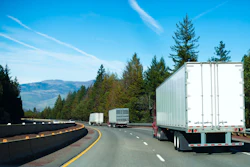
By the end of this year, Freightliner’s flagship Cascadia model will no longer be manufactured in its namesake region. Daimler Trucks North America (DTNA) confirmed that it is shifting truck production away from its longtime manufacturing hub in Portland, Oregon, and moving operations to the Carolinas.

Despite the production shift, Portland will remain DTNA’s corporate headquarters and the home of its new engineering facility. However, ending assembly operations in Oregon brings a major historical chapter to a close—Daimler has built trucks in Portland since 1942.
The transition impacts both the Freightliner and Western Star brands, affecting approximately 375 local employees.
In an official statement, the company framed the move as a strategic decision to optimize efficiency and safeguard its market position:
"This action will help ensure the company is making the right investments in the right locations at the right time, strengthening its long-term competitiveness and industry leadership. The decision was not made lightly. The Portland team has played a critical role in DTNA's success for decades, and we are deeply grateful for the dedication, expertise and contributions of our employees."
DTNA noted that it plans to assist affected staff through the transition by offering severance packages, career transition support, options to apply for internal job openings, and additional employee support resources.
Atlas Energy, Kodiak AI target 100-truck autonomous truck fleet in Permian Basin
 Atlas Energy says to-date its autonomous fleet has moved more than 450,000 tons of sand across roughly 7,000 trips, reaching a single-day high of 176 delivered loads on July 20.
Atlas Energy Solutions Inc. and Kodiak AI plan to expand their autonomous trucking operations in the Permian Basin, aiming to scale their driverless fleet from 28 to 100 trucks by mid-2027.
The expansion adds a second simultaneous load-out point along Atlas's 42-mile Dune Express sand conveyor system, allowing driverless deliveries across oilfield sites in both Texas and New Mexico. The two distinct load-out sites, located about 90 minutes apart, enable the companies to deliver proppant—critical sand used in hydraulic fracturing—across a wider geographic footprint at the same time.
The companies also expect to transition the autonomous fleet onto public roads by early 2027.
Atlas began deploying driverless trucks in 2024. As of late March this year, the company operated 28 driverless trucks across 15 routes, accumulating over 23,500 hours of operation in the first quarter of 2026 alone. To date, the autonomous fleet has moved more than 450,000 tons of sand across roughly 7,000 trips, reaching a single-day high of 176 delivered loads on July 20.
The expansion follows another recent technical milestone in which Atlas and Kodiak introduced autonomous triple-trailer operations, allowing a single driverless rig to haul three connected trailers with a combined weight exceeding 135 tons.
"We've demonstrated that autonomous trucking is delivering meaningful results today," said Don Burnette, founder and chief executive of Kodiak AI. "Our expanding partnership, which now covers two unique locations, is creating a blueprint for how autonomy can transform logistics.”