










Human trafficking is a $267 billion criminal industry affecting an estimated 50 million people globally. Research indicates that 81% of trafficking survivors were moved via some mode of transportation during their recruitment, placing truck drivers and industry professionals in a unique position to act as the first line of defense.
In this episode of the 10-44, we cover how the trucking industry is uniting to combat this crime. We discuss the vital work of TAT (formerly Truckers Against Trafficking) and how dealerships like Inland Kenworth are going beyond the sale to equip drivers with life-saving resources.
From identifying the subtle red flags at truck stops and hotels to the development of a new mobile training trailer, learn how the trucking community can recognize the signs of exploitation and why making one phone call can save thousands of lives.
Contents of this video
00:00 10-44 intro
00:10 Human trafficking and the transportation industry
00:55 Recognizing and preventing human trafficking
01:57 How dealerships can join the fight
03:28 How Inland Kenworth supports TAT
05:11 Industry buy-in and support
06:21 How to spot the signs of human trafficking
Matt Cole:
How the trucking industry can advance the fight against human trafficking.
Jason Cannon:
Hey everybody, welcome back. I'm Jason Cannon and my co-host is, Matt Cole. Human Trafficking is a global crime that affects an estimated 50 million people around the world, and transportation is a major cog in the wheel that allows criminals to move their victims. Research indicates 81% of trafficking survivors were moved via a mode of transportation during their recruitment into trafficking, and 76% utilized transportation during the course of their exploitation. Just more than half used transportation to aid their escape.
Matt Cole:
The TAT organization, formally known as Truckers Against Trafficking, has been on the front lines of educating and equipping people within different modes of transportation, from drivers to fleets to dealers with the tools needed to identify the signs of human trafficking and how to report it.
Jacob Kirkman:
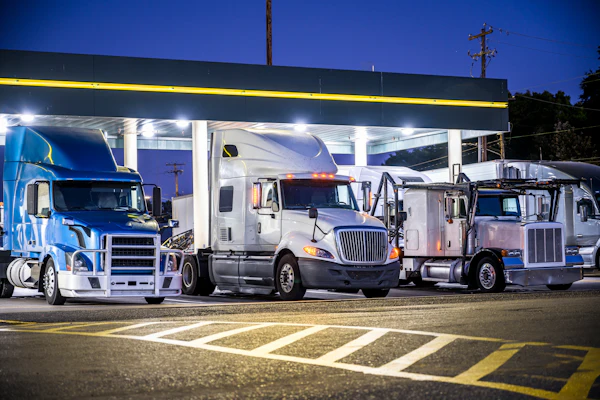
Human trafficking is a huge issue, not just in the trucking industry, but in every industry. Every providence, every state, every county. It's a 50 million people in slavery across the world right now. It's a $267 billion industry. It's a massive, massive problem, and truckers are poisoned a great position to combat human trafficking. They're at every truck stop. They're at every hotel and motel. They're all over our highways. They're in every major corridor that we're driving down, and truckers are in a great position to help combat and prevent that.
The dealership level, we don't usually see a ton of things like that because a lot of people know that our dealerships are trained in preventing and recognizing the signs of human trafficking. But a ton of our customers deal with this on a day-to-day basis, which is why we got involved with this to help our customers become aware, help our drivers become aware, and the people that we sell trucks to on a day-to-day basis need to know about this issue and be able to recognize and prevent it and make calls to save lives
Jason Cannon:
While a truck dealership and the people who work there may not be out on the highways like truck drivers to look for signs of trafficking, they're in perfect position to help equip their customers with the tools to be able to spot those signs.
Jacob Kirkman:
So we got involved about a decade ago, I think about in 2016, we did our first campaign with Truckers Against Trafficking, and we started with a few different things. Our biggest goal was to get a training pamphlet into every new Kenmore sold. So my boss, Don Blake, who has won an Industry Impact award with Truckers Against Trafficking, he got a pamphlet and every single warranty document of every single new Kenworth sold across the United States. So if you have a new Kenworth open up that warranty packet, you'll see a Truckers Against Trafficking pamphlet.
The second thing that we do here at Inland is we put a sticker on every single new truck sold. It looks just like this. It just says, do you need help? It has a great hotline number, and we did this to help our drivers have a quick resource. It's an easy number to remember -- 888-373-7888. If you see something, make a call. They're there to talk it through with you, recognize the signs. And third thing we really pushed here at Inland was training not just for our own employees, but for our customers as well. And TAT offers a free 20 minute training to anybody at any time online. It is super, super easy to do, and it goes into different modes of transportation. So if you're over the road or a local guy or an energy guy, or even a school bus driver, they have trainings for each one of those completely free to do. It's at tatnonprofit.org, tatnonprofit.org.
Matt Cole:
Since Inland Kenworth began supporting TAT in 2016, it has raised more than half a million dollars to support the organization by auctioning a special wrapped T680. This year, the dealer supports changing shape.
Jacob Kirkman:
So we started in 2016 with a campaign called Everyday Heroes, and we wrapped a T680 with all the TAT messaging and hotline number and everything like that, and we auctioned it off to our customers. And so the first year we raised $83,000. Second year we raised $161,000. And in this last year that we did it, we raised over $300,000 for TAT. So just a little over a half a million dollars in funding for them.
But this year we decided to do a little something different. We wanted to do something special. They have a training trailer from 1988. It's really, really cool. And they have all the survivor stories and victim stories and talks about the evils and the signs and how to prevent human trafficking, but the trailer roof is caving in and there's so many issues. And so we decided that we wanted to do something for them this year, and Great Dane came out and they donated a trailer. And so we decided to do dollar-for-dollar matching donations up to a quarter million dollars to help upfit and build out the trailer. So that's getting built right now in San Diego, and it'll be unleashed sometime mid next year and it'll go probably to over 50 different locations a year, help train drivers or go to the Capitol and all these different locations to help train drivers and the general public in recognizing the signs of human trafficking because a lot of the signs of this stuff is overlooked. It's little tiny things that people are missing that you would never know to look for if you don't go online and get trained.
Jason Cannon:
According to TAT, more than 2.3 million people within the trucking industry has completed its training. And Jacob says, inland Kenworth has seen nothing but positive feedback on its efforts from customers.
Jacob Kirkman:
It is incredible, the buy-in we've had. That Everyday Heroes Truck campaign that we did, for example, that first one that we sold for $83,000 was to Mikey Jimenez from J&L Trucking, and he actually donated that truck back to us during COVID, and we sold that truck again for profit, and we gave all that money back to tat. And so the buy-in from our customers is huge. Everybody wants to get involved. Everybody wants to get trained. At our Arizona trucking conferences and everything like that, people are so bought into Truckers Against Trafficking. It's a great cause, a great non-for-profit to join and to donate to, and they really care about stopping it. But even past that, I mean the stickers that we put on our trucks will come back for trade five years later, six years later, and that sticker's still on the window. Nobody takes it off. It's such a huge thing to these guys to be a part of it, to look out for it and to stop it. And it's a great cause.
Matt Cole:
As we mentioned, TAT has a brief training program online to help people learn to recognize the signs of human trafficking. Beyond that, though, Jacob explains how else the industry can support the fight against trafficking.
Jacob Kirkman:
Number one, get trained. Go to tat non-for-profit dot org. Sign up for the training, get trained 20 minutes. Super easy, get a certificate and everything, and 2.3 million people have done it. We want to get all 8 million people in the trucking industry through that training. The second thing you can do is look what you're doing at your local shops, even if you're just an owner operator, what are you doing when you pull up to those truck stops? Are you just in your own head and walking past everybody? Take a look around. Look for signs. It's going to be tiny little things like somebody being a little too controlling, identifying marks on the hands, necks, arms. You're going to be looking for somebody who can't speak for themselves or doesn't know what city they're in because they're getting moved around so much to just avoid them trying to find help.
That's a great sign. Anybody who's clearly underage, who's being sexualized, these are all things to look out for when you're at these truck stops, but just take a second, slow down, make it part of your pre-trip that I'm going to look around the lot when I go in to get a cup of coffee. I'm going to check and see if somebody's standing outside the bathroom and being weird. These are all things that you want to look for, and if you do see something and it looks a little fishy, make the call 888-373-7888. Just make the call. They're going to talk you through the signs, and if they think they need to connect you with law enforcement, they will. And you see one of these signs, two of these signs, and then all of a sudden you're like, man, I think something's going on here. So just make the call.
It's the best thing that you can do. It's go online, get trained so you can recognize the sign. But if you want tat to come out to your shop, your location to train your drivers, give 'em a call. They're more than happy to come out and do a training in person with all your drivers. They make it super fun, super easy. They'll probably even bring the trailer if you have enough people. So if you call 'em next year, you might even get the trailer at your location. It's going to be gorgeous. So these are all things that you want to look out for and do, but remember, you never know what's going to happen if you make a call. And I think the biggest misconception that I hear from a lot of drivers is, I'm just an owner up. I'm one guy. I can't make an impact in this.
But you can. And a lot of these networks are rings and rings of people, and you never know what one phone call could lead law enforcement back to. You could save thousands of lives and break down a huge ring and a huge network of people by making one phone call. You never know what somebody's going to say or give to law enforcement that can lead 'em into something else. So always just get trained, make the call, look out for it on your day-to-day. This isn't something that you got to be on 24/7, but when you're at those truck stops, you're in those busy locations, those hotels, those motels, right? Look for the signs of human trafficking and if you think you need to make the call,
Jason Cannon:
That's it for this week's 10-44. You can read more on ccjdigital.com. While you're there, sign up for our newsletter and stay up to date on the latest in trucking industry news and trends. If you have any questions or feedback, please let us know in the comments below. Don't forget to subscribe and hit the bell for notifications so you can catch us again next week.