










Does it seem like every day we’re watching trucking’s future play out on a roulette table? Each day seems to offer up some new, almost random, change in trucking. Whether it involves the geography of manufacturing, the geography of supply chains, the cost of production, the cost of fuel, the cost of labor, the availability of loads, the availability of labor, attention or inattention to rules and regulations, statements of fact or fallacy, trade agreements or lack thereof, focus on or ignorance of fraud, who is in charge and who is not, etc.
Company leaders nearly always get to play the “forward-looking statement” or “safe harbor” rule that permits them to safely, legally, predict the future. Those predictions can be fact-based or merely pure speculation — the courts now seem to allow either.
In that vein, I’d like to run some “what-if” scenarios by you.
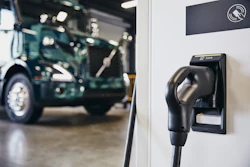
- What if Tesla is producing 50,000 battery-electric U.S. trucks a year by 2030? Take a look at the ramp-up rate Tesla achieved on its autos. Ramping up truck production is not infeasible. It means there is a charging network out there to support more than 200,000 heavy-duty BEVs. It means Tesla’s Semi has survived the tortuous first few years of product life when customers find new, creative ways to damage or break the vehicle. It means their service network also has managed to keep pace with vehicle warranty. It means their supply chain has become robust and capable of supporting both new trucks and those already in the field. It means they have repeat buyers. It means a market for used Tesla Semis has evolved. It also means a significant number of diesel trucks have not been made or sold. It means the residual value of older technology trucks likely has decreased significantly. Evidence for that was seen in 2008 to 2011 when non-aerodynamic trucks started gathering dust on dealers’ lots and back fences while more efficient, aero ones were in demand.
- What if the UP-NS merger as advertised removes 2.8 million trucks from U.S. roads? Forget that 2.8 million is roughly equivalent to two-thirds of all U.S. heavy-duty trucks. Remember, I’m in safe harbor mode and facts are not relevant. Since trains do not run everywhere, it means the supply chain — manufacturers making things — will have to move to railhead locations. This will also necessitate moving employees. Perhaps a boon in urban housing and commercial buildings not seen since the 1950s. The U.S. driver pool will need to constrict with fewer people needed to drive Class 8 trucks, but they may find employment as drivers of medium-duty trucks. OEMs will build and sell fewer Class 8 trucks. As the market shrinks, we may lose a truck maker or two. Dealers will struggle with cutthroat competition to sell whatever trucks they can. Start-up truck makers that optimistically saw a future will struggle to stay in business as a result of reduced cash flow and competition. Rail car manufacturers and rail company stockholders will be making money. Coastal and inland ports will have to build more railyards. Companies selling containers and container-handling equipment will be thrilled. Train manufacturers will see a growth in refurbishing to stretch engine life well past 50 years.
- What if U.S. diesel stays above $5 a gallon for years? Many studies have shown the effect of an employee’s salary increase is temporary. There is a period of brief euphoria and then things go back to the same level of production. The same seems true with inflation. The price of products increases and people just adapt. What else can they do? Personal debt tends to increase greatly when inflation increases. So do credit defaults. Small businesses eventually struggle and reduce staff size. Reinvestment in the long-term health of companies decreases. Satisfaction with things decreases. But trying times also produce innovation and a greater push for efficiency. Greater efficiency with trucks will mean less fuel will be needed to go the same distance, which will mean less fuel is needed from refineries and oil wells. Alternative fuels will become more economical. Technologies like automation or artificial intelligence will become necessities, replacing people with machines. Human wages will languish, compounding debt issues. The economy will begin to focus on necessities.
- What if climate change is real? Forget the various scientific positions, just go with believing it’s not and what happens if it is? People in coastal places like New York, Miami, San Francisco, Seattle, Baltimore, Boston and others will be learning from the Netherlands about how to build sea restraints. That beachfront property bought in Galveston, Texas, might be making full use of the 20-foot pylons the house is built on — you just may need a boat to get to it. Money will be found to keep the rising tide out of most places. That found money likely will mean something else doesn’t get funded. All the refinery infrastructure located near U.S. seaways may make urgent cases for being a priority for building seawalls. Pump makers will thrive. Trucking will thrive delivering materials for building seawalls and getting pumps to communities. Earth-moving equipment makers will prosper. Concrete will be in demand. Massive public works programs — like those in the 1930s — might employ a lot of people.
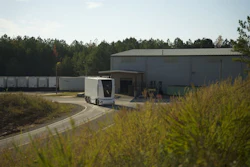
- What if autonomous trucks become cheap? Look at laptop computer pricing over the last 25 years. Or flat-screen televisions. Or cellphones. They have more capability every year, and generally cost less for the same capability you previously had (not that you can buy that older capability). AVs do not require comfortable interiors, or dashes designed by styling experts, or ergonomically correct seating, or great mirrors. In fact, they don’t really need a cab. Nor a driver. They do need technicians. And parts supply chains. And service centers capable of servicing them. Fleets may discover that eliminating the cost of a driver comes with getting locked into a monopoly software-and-maintenance agreement with their truck’s AV software maker. Annual software licensing may be non-negotiable. I saw this with a variety of software programs companies built into their management systems over the years. IT costs may grow faster than human salaries ever did. Only fleets won’t be able to fire the AV products.
Remember, I’m speaking under safe harbor rules, and these are just questions and idle speculation. Call it puffery if you will. But at least think about the questions.
As John Wick is apt to say in films, “Every action has consequences.” Thinking about what today’s decisions might cause is part of dealing with the daily chaos occurring in trucking and the future that chaos creates.