










While the latest IAA commercial vehicle exhibition in Hannover showcased an overwhelming array of zero-emission and hybrid powertrain solutions to meet strict EU climate goals, industry leaders face major hurdles regarding charging infrastructure, grid capacity, and aggressive pricing from incoming Chinese competitors.
- Regulatory Pressures: The European Union's strict carbon dioxide reduction mandates—culminating in major reduction targets for 2030 and beyond—are forcing truck manufacturers to rapidly shift away from traditional combustion engines.
- Diverse Powertrain Solutions: To comply with targets, suppliers displayed an "all-of-the-above" strategy encompassing battery electric vehicles (BEVs), hydrogen fuel cells (H2FC), hydrogen internal combustion engines (H2ICE), and advanced diesel efficiencies.
- Emerging Global Competitors: Low-cost Chinese original equipment manufacturers (OEMs) and new players like Tesla are poised to disrupt the European market, undercutting traditional pricing by up to 40% and prompting discussions around potential tariffs or local assembly.
- Infrastructure and Grid Bottlenecks: A severe lack of public charging stations, insufficient electrical grid capacities, and high land requirements remain massive roadblocks to achieving full commercial fleet electrification on schedule.
Every two years, the largest commercial vehicle truck show happens in Hannover, Germany. This year’s IAA show was rich in technology and global presence.
An all-of-the-above menu of powertrain solutions was displayed by suppliers, most of them exhibiting several options, such as battery electric, hydrogen, hybrid, alternative fuel, and diesel efficiency solutions. Chinese OEMs are also attempting to enter the market. All of this creates a major disruption to traditional diesel-powered vehicles.
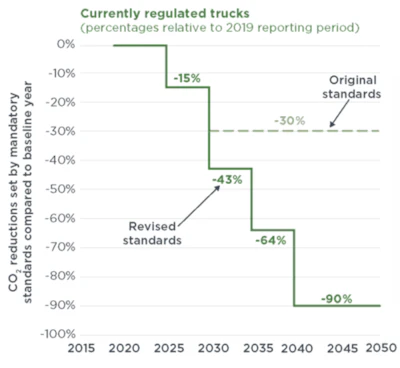
What is driving all of this? As we Americans have seen deregulation of greenhouse gas standards and now focus on improving efficiency and lowering operating costs, Europe and other regions are focusing on decarbonization. More specifically, Europe has very stringent carbon dioxide reduction initiatives. Figure 1 illustrates these standards.
The European Union has set standards to reduce carbon dioxide relative to a 2019 baseline. Each OEM needs to reduce its vehicles' aggregate carbon dioxide emissions. Most have met the 2025 standard, which requires a 15% reduction. The challenge comes in 2030, 2035, and 2040. These are very stringent standards and will require an OEM to offer a mix of solutions.
Said another way, going from 2025 to 2030, approximately 30% of their product offerings need to be either battery electric vehicles (BEV), hydrogen fuel cell vehicles (H2FC), or hydrogen internal combustion engine vehicles (H2ICE). Hybrids can also be a part of the solution.
 European CO2 reduction targets Source: ICCT report
In addition to these regulations, there could be some total cost of ownership benefits that drive zero-emission vehicle adoption, especially when considering the price of fuel in Europe. As I filled up my rental car, I paid $10 a gallon. While there is an initial cost penalty for BEV, H2FC, H2ICE, and infrastructure, there is downward pricing pressure due to low-cost Chinese vehicles. Chinese trucks are estimated to be at 30% to 40% of the price of traditional OEMs. In addition to the Chinese, one should not forget about Tesla, which also has plans to enter Europe.
My takeaways:
- BEVs: All the major European OEMs offer a BEV. Most of them have designed their trucks to have a couple of battery pack options, providing two different ranges, with many offering 700 km, which is equivalent to 435 miles. The 700 km trucks have battery packs with about 600 kWh of energy. This range is sufficient for regional haul duty cycles, which fit Europe quite well given its regional geography. If this is insufficient, there is megawatt charging system (MCS) capability. Most OEMs indicated this capability and talked about the ability to get a quick stop-and-go charge in less than 30 minutes, taking the state of charge from 20% to 80%.
- The Chinese are coming: The other major disruptor was the presence of Chinese OEMs who indicated plans to enter Europe. These vehicles are being priced 30% to 40% less than the traditional OEMs' products. Inside China, BEVs account for 30% to 40% of new truck sales. The truck market is over one million new sales per year, so China has superior volume leverage and should be taken seriously. While Chinese OEMs have work to do to modify their designs for European applications, build an aftermarket and service network, and build customer loyalty, there is one additional question on the table: Will Europe establish tariffs or other restrictions that will make it harder for them to enter the market? There is talk of some protectionism. If you look at the hundreds of thousands of jobs that are at risk, it seems likely some action will be taken. However, some Chinese OEMs are setting up local assembly in Europe, so they should not be taken lightly.
- H2FC and H2ICE: Most OEMs showed some kind of hydrogen offering with ranges of 1,000+ km (621 miles). Cellcentric, Ballard, Toyota, and other fuel cells were on display. The OEMs mentioned these powertrains will be available late this decade. One interesting tidbit is that Toyota joined the Cellcentric joint venture, and yet they also had their own version on display. Also, you might be asking about H2ICE since it is technically not a zero-emission vehicle. The European regulation, however, allows H2ICE to be credited if it emits less than 3 grams of carbon dioxide per ton-kilometer.
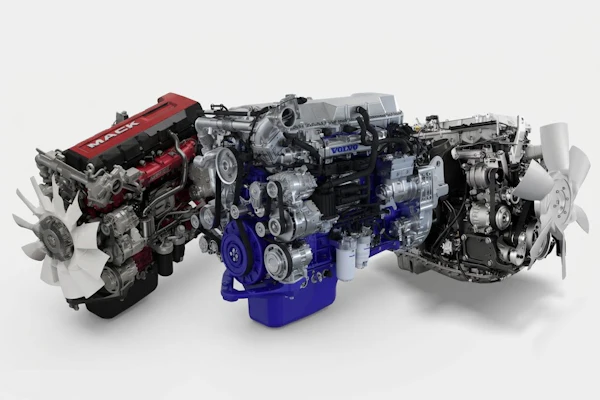
- Diesel efficiency, range extenders, and hybrids: While not the sexiest topic to talk about, diesel will still be the dominant solution for the upcoming years, and improving efficiency is critical, especially at $10 a gallon. Also, from a decarbonization standpoint, a 1% reduction in fuel translates directly to a 1% reduction in carbon dioxide. All OEMs displayed diesel engine improvements. Many of them are claiming a 3% to 4% reduction in fuel consumption. DAF describes it as "Transportation Efficiency." Not only are they making improvements to the base combustion system, but they are also working to match the right configuration with the duty cycle. This is all critical work and goes a long way toward lowering fleets' operating costs and improving the environment. Mahle, BAE, Turntide, and others displayed their hybrid solutions. Mahle offered a range extender solution and claimed they can reduce carbon dioxide by 80% to 90%. This is highly dependent on the sizing of the battery, so it should be taken with caution; but in general, hybrids and range extenders can contribute to a reduction in carbon dioxide and particulate emissions. Given the infrastructure problems described below, these could be very good solutions for cleaning the environment in a practical way.

Is Europe serious, and will the 43% reduction really happen in 2030? That is the $64,000 question. However, similar to the United States, infrastructure build-out is key to reaching this level of adoption. It is my belief that while Europe is serious and will not completely abandon these targets, there will be some kind of adjustment or delay to the carbon dioxide reduction targets.
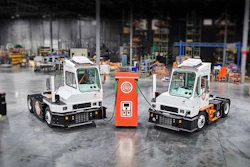
- Electrical grid and charging infrastructure: There are many efforts to build out the grid and electrical charging stations. One major joint venture is a company called Milence. This is a joint venture between Daimler, Volvo, and TRATON. Milence issued a white paper and estimated that 8,500 to 14,000 public chargers will be needed. Today, Europe has fewer than 2,000 chargers, so a lot of work is needed to support the carbon dioxide mandate by 2030. Furthermore, building out chargers is one thing, but ensuring the grid is capable is another. In the United States, we have some fleets with 50+ heavy-duty electric trucks, and they utilize 5 to 10 MW of power. This is equivalent to the power needed to electrify a small village in Europe. Also, something that does not get enough attention in the United States and in Europe is the land requirement for electric charging stations. There are many highly populated regions in Europe where land is limited, and electrical charging stations might need four to five times more space than a diesel fueling station.
- Regarding hydrogen: Toyota announced an alliance with Daimler, Volvo, Bosch, Air Liquide, and others to build out hydrogen. It looks like this alliance will have teeth and make progress, but it is not clear that there will be enough refueling stations by 2030. Finally, regarding hydrogen (and electricity), one must really understand the source. If hydrogen is produced with renewable or nuclear energy, there is a favorable carbon dioxide reduction. However, there are many other forms of hydrogen that have an unfavorable carbon impact. And where there is green electricity, let's not forget that data centers are competing for the same renewable energy.
It is likely something must give regarding the carbon dioxide targets. While the OEMs will offer zero-emission products, it is likely that the infrastructure will not be ready. This seemed to be the consensus at the show. Assuming something is done, the question is what kind of modifications would be made to the European targets? Will they shift the 43% reduction out five years? Will they reduce the penalties? Will they look at the targets from a well-to-wheel standpoint and allow renewable fuels to contribute? At this point in time, no one knows exactly what the outcome will be.
If you like truck technology and studying disruptors and macro factors such as Chinese competition, regulation, and infrastructure challenges, IAA Hannover was the place to be. All of these are major disruptors to diesel-powered vehicles in Europe. The powertrain options are mind-boggling for the industry. It will be interesting for U.S.-based OEMs, Tier 1 suppliers, and fleets to observe how this evolves.