










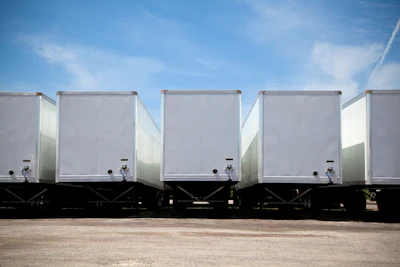
April trailer orders show surprising strength, according to ACT Research and FTR Transportation Intelligence. Defying the seasonal spring softness, FTR reported net orders climbed 11% from March to 19,953 units and surged 100% compared to April 2025.
ACT pegged preliminary net trailers at 19,400 units, a modest 3% increase from March’s 18,800 units, but an impressive 126% jump year over year.
 ACT Research
April would normally be expected to decline as one of the weakest months of the annual order cycle, noted Jennifer McNealy, director of CV market research and publications at ACT Research.
The pattern seems to have shifted this year, McNealy said, as the order pickup that typically begins in September or October of last year didn’t occur until December, pushing the cycle to months later than usual.
FTR reported that builds were essentially flat in April at 17,576 units and up 1% year over year.
 FTR
FTR
The trailer market seems to be transitioning from “deterioration” toward “stabilization and modest improvement,” said Dan Moyer, senior analyst of commercial vehicles.
Freight conditions are improving narrowly, but Moyer said the recent rebound is being driven by replacement demand and selective fleet activity rather than broad expansion.
Trailers are likely continuing to underperform compared to Class 8 in the near term, he noted. Improvement seems to be targeted among stronger fleets, aged-equipment replacement and dry van.
As freight rates accelerate and carriers become more confident in the market, ACT questioned whether higher order intake will happen or traditional Q2 order weakness will prevail. McNealy said fleets continue to falter between placing trailer orders and accelerating Class 8 tractor purchases.
For now, based on the April data, McNealy said there was one more month of improved order intake, though uncertainty remains on how two months of the second quarter will unfold.
McNealy highlighted another potential headwind: “Concern is mounting about how quickly trailer OEMs will build down the relatively still-thin backlog, particularly given concerns about the level of activity in the key freight-generating economic sectors that drive transportation demand and high petroleum prices that weigh on purchasing decisions for both consumers and fleets.”




Cost and policy risks continue to shape demand patterns, Moyer said. A change in how the Section 232 steel and aluminum tariffs are applied increases price and sourcing factors for trailer equipment with metal exposure. Van trailer antidumping and countervailing duties investigation also adds uncertainty.
Moyer added that a durable upcycle will require “stronger fleet margins, higher trailer utilization, further absorption of excess capacity, and clearer visibility into trade-related costs.”