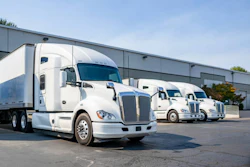
FTR data shows a sharp rebound in U.S. heavy-duty trailer orders for August, as net orders reached 24,144 units — a 43% jump from July and a 221% increase compared to August 2025.
Meanwhile, ACT Research’s preliminary figures put August net orders at roughly 24,200 units, up 55% month over month and 193% higher than the prior year.

However, both firms point to the same caveat: the steep annual gains are largely a reflection of how weak trailer orders were a year ago rather than a sign of strength in the current market.
Motor carriers added more than 8,700 trailers in the second quarter of this year, according to data from RigDig, a company owned CCJ parent company Fusable.
Still, FTR noted that the improvement reflects stronger replacement demand, supported by healthy freight rates and constrained capacity. With the Class 8 truck pre-buy cycle now wrapped up and the market turning to the 2027 ordering cycle, fleets are expected to focus on capital for replacing trailers, as well as possible modest fleet growth.
For the full 2026 season (September 2025-August 2026), FTR reported that orders totaled 212,116 units, a 13% increase from the previous season. Year-to-date net orders stand at 150,320 units, up 38% from a year ago, while YTD build reached 130,922 units, down slightly 1% year over year. Production itself was steady, rising 5% from July to 16,953 units, flat compared to the same month last year.
While the order growth is a positive sign, Dan Moyer, senior analyst of commercial vehicles at FTR, noted that the recovery isn’t consistent across all segments. Fleets seem more focused on replacing equipment, but high equipment costs and competing capital requirements are keeping spending cautious.
Trade policy is also a growing cost factor for manufacturers and OEMs, Moyer noted, listing the following issues:
- April’s revised steel and aluminum tariffs
- Ongoing antidumping and countervailing duty proceedings tied to van trailers
- New retaliatory tariffs from Canada affecting trailers
“These trade measures are adding to an already high-cost trailer environment,” Moyer said.
ACT Research Director of CV Market Research & Publications Jennifer McNealy echoed similar sentiments on the year-over-year comparison, reiterating that the 193% year-over-year jump reflects how weak 2025’s market was rather than an extraordinary current market.




While a seasonal uptick from July was expected, McNealy noted that the scale of it was unusual because July is typically the weakest net order month as fleets finalize current-year plans and OEMs work through backlogs.
This year’s cycle diverted from the norm, McNealy said, noting that the order cycle that would typically have begun around this time last year was pushed back due to soft freight rates and policy uncertainty.
“With freight rates and carrier profits on the mend, August orders are on track to be the best since last December and the second best in the past 30 months,” McNealy said.
Although OEMs typically open 2027 order books later, McNealy said the uptick aligns with anecdotal reports that order boards opened ahead of schedule due to limited remaining build slots this year.
Some buyers remain cautious.
“Rates have risen in 2026, but the past few years have been hard for carriers, and now the challenges of growing pent-up demand and higher maintenance costs and downtime remain as counter-weights to their new equipment purchase decision-making process," McNealy said.
ACT attributes the spike to three factors: fleets ordering ahead of anticipated tariff-driven price hikes, improving long-term industry conditions and pent-up replacement demand.