










The House Energy and Commerce Committee has unanimously passed a bill to reauthorize the Diesel Emissions Reduction Act, advancing a program aimed at cutting emissions from heavy-duty vehicles.
The legislation, introduced by Reps. Doris Matsui, D-Calif., Ken Calvert, R-Calif., Chellie Pingree, D-Maine, and Nick Langworthy, R-N.Y., would extend the DERA program through fiscal year 2029 at $100 million annually. The measure now heads to the full House of Representatives for consideration.
Established nearly two decades ago, DERA provides federal grants and rebates to help finance the voluntary replacement or retrofit of older heavy-duty diesel vehicles and engines. The program is credited with saving more than half a billion gallons of fuel since its inception.
Because the program is technology-neutral, it allows for innovation and the use of alternative fuel sources such as renewable diesel. Industry proponents note that renewable diesel generates a lower lifecycle carbon footprint than battery-electric vehicles at a fraction of the cost.
Henry Hanscom, chief advocacy and public affairs officer for the American Trucking Associations, praised the committee's vote and the lawmakers who spearheaded the bill.
“For decades, the trucking industry has worked alongside policymakers to advance cleaner technologies and reduce emissions. As a result of that partnership, truck emissions of NOx and particulate matter have fallen by 99% since 1970,” Hanscom said. “DERA has been instrumental in that progress, helping motor carriers invest in the newest, cleanest equipment and accelerate the deployment of proven innovations.”
Hanscom added that continuing the program will strengthen supply chains, support manufacturing jobs and deliver environmental benefits through a "collaborative, market-based approach."
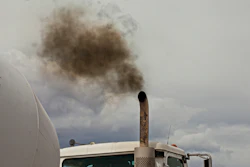
Advancements in clean diesel engine technology have drastically reduced the trucking industry's environmental impact over the last several decades. According to industry data, it would take 60 of today’s trucks to emit the same amount of particulates as one truck did in 1988, and more than 200 modern trucks to match the nitrogen oxide emissions of a 1988 model.




Additionally, a newly manufactured truck produces half the carbon dioxide emissions of a truck manufactured in 2010, while emitting 99% less nitrogen oxide and particulate matter than previous generations.