










Maintenance and repair costs are among fleets’ top operational concerns in the second half of 2026. According to Motive’s recently released State of Fleet Maintenance report, 80% of survey respondents cited that as their biggest challenge, followed by driver recruitment and retention at 60% and fuel cost management and fraud prevention at 47%.
The report noted that the average annual repair and maintenance cost per heavy-duty truck in the U.S. is north of $16,000, likely because parts costs rose 3.7% year over year through the fourth quarter of 2025 with tariff-driven increases on steel and aluminum components applying additional upward pressure on brake parts, chassis hardware and structural components in 2026.
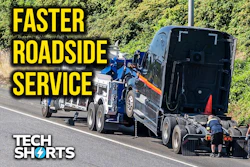
Reactive repairs cost three to nine times more than planned preventive maintenance because of additional expenses associated with emergencies: towing, emergency labor rates and expedited parts, lost productivity from unplanned downtime or rental equipment to cover the gap, missed delivery penalties, admin overhead of rerouting and rescheduling and the unknown cost of reputation damage from service disruptions, the report said.
Citing the American Transportation Research Institute’s analysis of trucking’s operational costs and FleetNet America, the report said fleets experience 8.7 days of unplanned downtime per vehicle per year, costing an estimated $448 to $760 per day per vehicle in lost productivity.
Motive suggests AI is the answer, and the data shows fleets are not only open to adoption but are comfortable using AI. Notably, almost 50% said they would be comfortable using AI to fully automate workflows without human review. The problem, instead, lies in how to effectively deploy it for optimal ROI.
“The industry isn’t waiting to be convinced that AI has a role in fleet operations,” the report said. “What the industry is still working through is how to apply AI consistently across physical operations, especially in areas like maintenance, where value depends on connected systems, cross-functional workflows and reliable execution beyond the cab.”


An integration problem
The report noted that areas, like predictive maintenance, that require cross-system integration to function, lag far behind. Sixty-seven percent of survey respondents said they struggle to predict which vehicles are at risk of failure or unplanned downtime, and 80% described their fleet technology environment as having some systems integrated but with significant gaps.
“The top pain point is about foresight — seeing what’s coming before it happens. The supporting pain points are about connectivity — getting the right data to the right people in time to act on it,” the report said. “The inability to predict failures is, in large part, a downstream consequence of fragmented systems that prevent the data from being analyzed holistically and powering automation.”
Motive recently launched AI-powered maintenance in response.
It combines seven products — Driver Safety, Fleet Management, Equipment Monitoring, Spend Management, Workforce Management, Operations Intelligence and Maintenance — on a single AI platform.
It connects the vehicle or asset, the driver, repairs and the back office into one platform. It also unifies fault codes, inspections, maintenance workflows and spend data in that same system, giving fleets a real-time view of their entire maintenance operation, from the detection of a fault code to a completed, cost-tracked repair.
“Before Motive Maintenance, what happened on the road and what happened in the shop were two separate records," said Luke Crawley, fleet manager at H&R Agri-Power Inc. "Now, inspections, fault codes and work orders will be able to run through a single system so problems surface sooner, more of our assets stay in service, and we will finally see the real cost of operating our fleet. Rather than paying emergency rates when something fails, we’ll be able to fix issues early, run higher uptime, save hundreds of hours a week, and spend far less to keep our fleet moving."
Motive's solution
Motive Maintenance provides proactive diagnostics.
AI fault code diagnostics translate codes into plain-language explanations that flag issues, recommend service and prompt drivers to take action. Severity-based prioritization ranks issues automatically, and health insights combine defects identified in inspections and service schedules with vehicle and asset availability.
AI-driven automations can turn inspection defects captured in the Motive Driver App, fault codes and service reminders into digital work orders, and AI-powered invoice scanning automatically populates maintenance records with accurate line items.
Additionally, Motive Maintenance offers proactive warranty tracking to prevent fleets from paying for repairs already covered, and multi-location inventory tracking prevents over-ordering parts, while data-driven replacement analysis pinpoints the optimal time to retire a vehicle.
The system also pulls fuel spend from Motive Card together with repair and maintenance costs for every vehicle and asset tracked in Motive, giving customers insight into the true cost of operating each vehicle.
In Motive’s State of Fleet Maintenance Report, 40% of respondents said they want a single dashboard showing true cost of ownership per vehicle across all spend categories, and 27% said they want vehicle health and telematics data to automatically trigger maintenance work orders.
“The answer isn’t more standalone tools. It’s fewer, better-connected platforms that are integrated and automated,” the report said. “The next phase of adoption will likely belong to platforms that don’t just surface insights but connect those insights directly to maintenance decisions, work order workflows and cost controls.”