










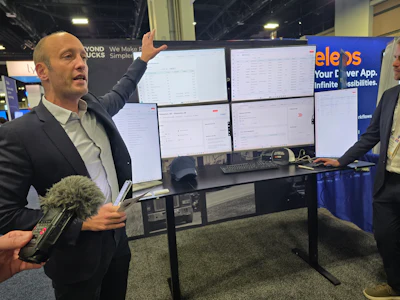
BeyondTrucks announced its new Compatibility Engine for its AI-powered transportation management system. The new feature ensures the driver, trailer and tractor are properly matched to the load prior to dispatch to lower the chance of a rejected load, compliance violation or safety incident.
In most dispatch situations, a single dispatcher might consider more than 50 factors when assigning a load to a driver, said Hans Galland, BeyondTrucks CEO. But oftentimes that planning “happens on a Post-It note or happens in the head of the dispatcher who uses tribal knowledge to decide if a driver is qualified to haul a certain load.”
Galland said the Compatibility Engine allows the dispatch team to incorporate that tribal knowledge into the dispatch system so it becomes a guardrail in the decision-making process.
“[It] lets fleets turn tribal knowledge into institutional knowledge," Galland added. "For most fleets, these rules will differentiate their service, and help them deliver service consistently and safely, every time."
Fleet managers can create their own unique sets of rules in the Compatibility Engine for each driver, truck and trailer based on unique hauling applications of each customer to ensure the dispatch meets rules requirements. The system uses deterministic logic so the same inputs always produce the same answer and every optimized plan is executable.
Key capabilities of the new BeyondTrucks Compatibility Engine include:
- Flexible Rule Definition: Requirements can be set at the stop, commodity, customer or equipment level and matched against the qualifications and status of any driver, tractor, or trailer.
- Highly Configurable: Each fleet defines its own rules based on its operations, customers, and safety policies.
- Explainability: When an assignment is flagged or blocked, the dispatcher sees exactly which rule applied and why.
- Audit Trail: Overrides are logged with who made them and why, giving safety, compliance, and insurance teams a clear record.
- Live Compliance Data: Driver and equipment compliance status can feed directly into compatibility checks rather than relying on manually updated records. Integrations with compliance platforms such as GWC or DQM Connect are supported.