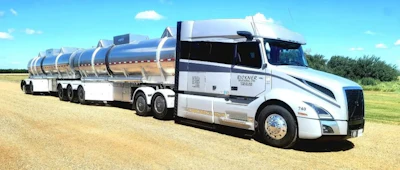
Bickner Trucking out of Saskatchewan, Canada, hauls some of the heaviest loads on North American highways, hauling 140,000-pound Super B-train grain hoppers and liquid fertilizer tankers across Western Canada and the Northwestern U.S.
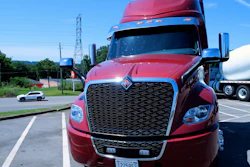
While those heavier loads tend to require more fuel, the company has managed to improve fuel economy with its latest generation of efficiency units: a combination of Volvo VNL 2.47 I-Torque trucks with aerodynamic tankers by Advanced Engineered Products, specced to Bickner’s requests.
80 tips to maximize fleet fuel efficiency
The four units the company introduced last year are coming up on their one-year anniversary and those new units just keep getting better, according to John Bickner, co-owner and manager of Bickner Trucking. “We're starting to have about 500,000 miles on this whole project now, which is getting to be some pretty solid numbers," he said.
Bickner recently shared the 30-, 60- and 90-day average miles per gallon among the four units, all with a 60 mile-per-hour cruise set, 53% loaded and a combined 5% idle:
- July 1-31: 7.65 U.S. mpg
- June 1 to July 31: 7.65 U.S. mpg
- May 1 to July 31: 7.49 U.S. mpg
The fleet’s fuel economy improved 2.1% from its 90-day average of 7.49 miles per gallon to 7.65 miles per gallon over the most recent 60- and 30-day periods. In another 30/60/90-day analysis Bickner performed last year, the highest four-truck average was 7.21 U.S. miles per gallon.
 Bickner Trucking's 90-day fuel average across its four efficiency units.John Bickner
That’s a 6.1% improvement in fuel efficiency between the highest averages of the two analyses.
“They’ve done well,” Bickner said, adding that he thinks the units could improve another 3% to 4%. “As we keep moving forward, this is the template of spec we’ll be working with,” though, he said he has some ideas to play with the speccing on the next unit.
Bickner said the company will slowly bring in more of these units
“We're just playing a little more with computer settings, barometers, dialing it in. We finished working on the trailers – getting them to work with the trucks well,” he added. “We're really happy.”