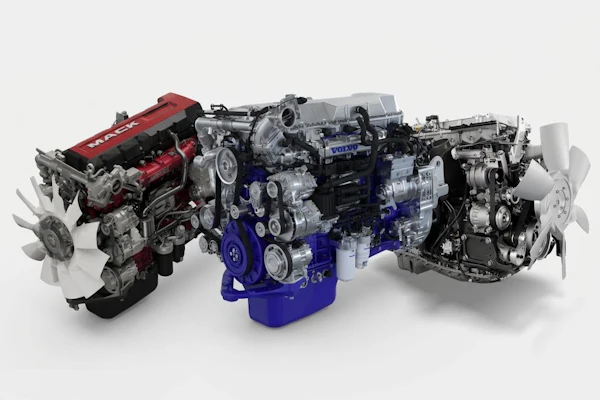











Detroit is opening the order books for its sixth generation Detroit DD13 and DD15 engines starting Sept. 1. The lineup is engineered to comply with the Environmental Protection Agency’s 2027 emissions regulations while preserving existing fuel economy, durability, and operating characteristics.
For the 2027 model year, tailpipe nitrogen oxide (NOx) limits will drop by more than 80%, and particulate matter limits will fall by 50%.
Detroit earlier this month said it would fully transition its North American heavy-duty diesel lineup to its Gen6 platform at the start of 2027, rejecting parallel production schemes and non-conformance penalties.
PACCAR and Cummins, the latter of which will introduce its new HELM platform engines—the X10 and X15—through a gradual production ramp starting in January 2027, are among the OEMs that will keep select current-generation engines available for a period of time next year.
Detroit has sold more than 1.2 million heavy-duty engines for on-highway and vocational uses since introducing the platform in 2007. Instead of designing an entirely new architecture for the coming next generation engine, Detroit is carrying over approximately 75% of core components from the previous engine generation.
“Customers don't want to choose between proven performance and future-ready technology. With the Detroit Gen 6 engine platform, they don’t have to,” said David Carson, senior vice president of sales and marketing at Daimler Truck North America. “We’ve built on the foundation customers already know and trust while introducing targeted improvements that make the transition to EPA 2027 straightforward.”
Key mechanical updates across the Gen 6 lineup include a redesigned and simplified fuel system to maintain optimum pressure while delivering more consistent fuel flow; an integrated thermal management that uses engine exhaust heat to help the aftertreatment system reach operating temperatures faster, reducing the frequency of parked regenerations; and an aftertreatment package that fits within the existing chassis space without requiring back-of-cab modifications, allowing vocational body builders to maintain current equipment configurations.

The company stated the Gen 6 platform underwent three years of testing across high altitudes, extreme temperatures, and extended idling, alongside more than 8 million miles of real-world operational validation.