










This is my last thought leadership piece for CCJ and NACFE. I want to thank CCJ’s chief editor, Jason Cannon, and the CCJ organization for publishing my roughly 200 NACFE thought leadership pieces on trucking efficiency since 2020.
I also want to thank NACFE, particularly its executive director, Mike Roeth, and our communications director, Denise Rondini, for giving me this stage and expertly guiding me on it.
Everyone has an opinion; it’s been rewarding to share mine across CCJ’s readership and to get the occasional unprovoked positive feedback through LinkedIn. One of the self-imposed rules I’ve followed when writing my blogs is to desperately try to avoid politics. Staying on the fringe of deeply divided politics has been a challenge, especially when the politics directly impact NACFE’s core goal of helping the industry use less fuel.
Another self-imposed rule I’ve followed is to attempt to be unbiased about all the technologies available to fleets. This has been particularly challenging where, as one of my managers said so well, logic and reason don’t apply. Trying to call out some ideas while maintaining a clinically clean, unbiased voice is tough. Trying to be objective is even harder.
Giving technologies the benefit of the doubt and viewing them from multiple perspectives required overcoming my own biases and experiences. It required listening to and reading multiple sources. I tried to find the positives amid the obvious negatives.
Bias is natural. I’ve talked to many groups and people over the years across the entire spectrum of trucking. People see what they want to see. They read what they want to read. One very experienced editor I worked with thought all I wrote about was electric vehicles. I pointed out all the reports I’d written on other technologies, but none of that mattered; what he saw was just the electric truck ones.
I worked with a natural gas group, and they were concerned that I didn’t support natural gas, despite having helped author reports on it. A hydrogen group was concerned I wasn’t supporting hydrogen even after publishing two lengthy reports on it. Then there is the editor who always brings up propane. You got me there; as I’ve never seen propane in production for Class 8 trucks, I’ve often put it on the back burner.


We see what we choose to see. It’s called audience confirmation bias. One source I found, Peter Sandman, defines it this way: “Audience confirmation bias is when people interpret and remember information in a way that supports their preexisting beliefs, often ignoring or downplaying evidence to the contrary. This is especially common in communication, education, and persuasion contexts.”
Sandman states, “Confirmation bias is a system of defenses aimed at protecting you—and me, and everybody—from uncomfortable information.” We don’t like our boats getting rocked. We pick and choose what we want to read and ignore the rest or denigrate it. We believe our opinions are sacrosanct, so any evidence to the contrary is ignored. We seek evidence that supports our positions. Social media and advertising seem to have compounded this by actively funneling to us those things we seem to like, reinforcing our biases.
The analogy comes to mind of a dog owner marveling that their dog always knows where to dig up the bone in the backyard. In reality, the dog, and prior dogs at that house, have deposited many bones in the yard such that the odds of finding one, digging anywhere, are pretty good. But the visual evidence is that the dog went right to one spot and dug up a bone, so he must be really good at remembering where the bone is.
Confirmation bias is real, and it’s obvious everywhere, especially in politics. Politics seemingly abhors objectivity. Politics needs every topic to be framed as a football game—us versus them, with one winner and one loser. There are no tie games, and nobody plays just for fun. In football, there are no gray areas where both sides are winners or both sides are losers. In football, there are only two teams.
In politics, particularly U.S. politics, the audience is felt incapable of handling more than two choices, two sides. It’s rather demeaning to think we can’t handle more. The real world is more complex than football. There are always more than two sides.
Continuous improvement is a goal for all. Facing each day and trying to make something better—whether it’s by reducing costs, improving performance, reducing weight, making systems last longer, reducing environmental impact, and more.
The trucking industry seems to have a public image of being immovable. Yet, over my entire career, it seems to have constantly changed. In 1981, when I first stepped into a Freightliner cabover at the company’s engineering lab on Swan Island in Portland, Oregon, the average fuel economy was well below 6 mpg. The vehicles were loud, barely able to meet pass-by noise regulations. Aerodynamics was nearly non-existent and frowned upon.
Fuel was $1.25 a gallon. The national speed limit was 55 mph. Black smoke coming out of the exhaust stacks was a badge of honor. Anti-lock brakes were joked about. Paper-based management ruled. Pay telephones were used to talk to the office. Vehicle systems were largely mechanical. Clutch pressure required some muscle. Manual shifting was an art form. The most complex piece of electronic equipment was likely the CB radio on the dash.
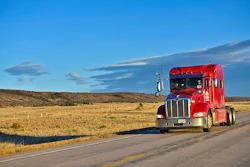
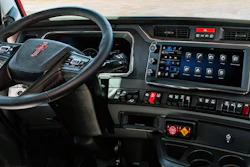
In 2026, nearly all the trucks produced are conventionals. Fuel is now north of $5.50 a gallon. Everything seems to be digital. Cab interiors are car-like. The word ergonomics is being used. Automated manual transmissions rule. The majority of new vehicles are aerodynamic. Good drivers are exceeding 10 mpg, excellent drivers are exceeding 11 mpg, and average drivers are well above 7 mpg.
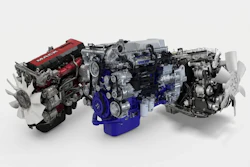
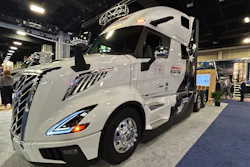
GPS-based telematics systems seem to know where every truck and driver are within inches. Exhaust gases are clear. Pass-by noise requirements are so easy to meet that many test facilities have disappeared. Highway speed limits now exceed 70 mph in many places. ABS is standard. Alternatives to diesel are maturing: natural gas, renewable natural gas, biodiesel, blended diesel, renewable diesel, electricity, hybrids, hydrogen, and even propane (see, I included it). Autonomous vehicles are hitting the road. Things that look a bit like cabovers are even coming back into vogue.
If you have vested interests in one of these technologies, you likely have confirmation bias. You welcome headlines about your vested interest. You file headlines about the competing alternatives in the category of competition.
Just stop. Take a moment to be objective. There can be more than one winner. There doesn’t have to be a loser. The world is not a football game. Continuous improvement applies to everything. The trucking industry has been continuously improving and will continue to do so. Let it.
Thank you for reading my thoughts over the last six years.