










Despite the Trump Administration last year striking many regulations aimed at spreading the deployment of electric trucks, the U.S. hit 59,313 cumulative zero-emission vehicle deployments as of June 2025 (.39% of the total truck stock), according to the latest Zeroing in on Zero-Emission Trucks (ZETs) report released by CALSTART Tuesday.
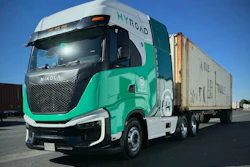
Nearly all of these deployments, according to CALSTART, are battery-electric, though 197 hydrogen fuel cell electric trucks have been deployed in the heavy-duty (HD) truck segment, including 42 added in the first 6 months of 2025. The price of hydrogen must be around $5/kg to make hydrogen fuel cell trucks a market competitive option, CALSTART said, noting the current market rate for hydrogen is between three and six times higher.
 Zeroing in on Zero-Emission Trucks (ZETs) report released by CALSTART
While the total number of clean trucks on the road continues to climb, the report highlights a complex landscape of surging niche markets contrasted against a significant slowdown in overall adoption rates.
[Related: Peninsula Truck Lines adding PNW compliance surcharge]
A tale of two trends
The first half of 2025 saw the addition of 6,526 new ZETs, according to the report. While this contributes to the record cumulative total, it represents a 49.2% year-over-year decline in new deployments. Currently, zero-emission models account for roughly 1.32% of all new truck deployments nationwide, according to CALSTART.
 Zeroing in on Zero-Emission Trucks (ZETs) report released by CALSTART
Despite the broader dip, specific sectors are seeing record-breaking momentum:
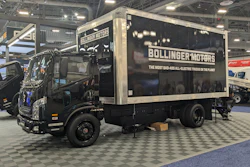
- Medium-duty trucks: This segment saw 311 new deployments, a 61% increase over 2024 and its best-ever half-year performance. Notably, more medium-duty zero-emission trucks were deployed in the first half of 2025 than in all of 2024.
- Yard tractors: Growth surged by 36%, with 300 new units hitting the field. ZETs now make up nearly 3% of all yard tractors in use.
- Non-cargo-van segments: These combined categories added 1,152 units, outperforming their two-year average.
CALSTART Vice President of Trucks and Off-Road Tor Larson noted progress in deployments is being driven "by clear policy signals; smart incentives; and close coordination between fleets, manufacturers, utilities and governments."
Conversely, the cargo van segment—previously a major driver of growth—struggled, recording 5,374 deployments, less than half of its 11,000-unit average the previous two years. The nearly 50% year-over-year decline in deployments is largely due to a dip in the cargo van segment, which remains most electrified trucking segment.

State leadership and normalization
Eighteen states now have more than 1,000 ZET deployments, up from 17 in CALSTART's last market update.
California continues to drive ahead and lead in ZET deployments by a wide margin, with the most deployments in the first half of 2025 (2,920). California was followed by Florida (1,077) and North Carolina (513). Other states that stood out included Louisiana and Alabama, which saw their 6-month 2025 deployments more than double their previous cumulative total (increases of 346% and 116%, respectively).
 Zeroing in on Zero-Emission Trucks (ZETs) report released by CALSTART
The road ahead
The report suggests the low-hanging fruit phase of adoption may be concluding. Future growth is now heavily dependent on how the U.S. tackles persistent hurdles, specifically upfront vehicle costs and the expansion of charging infrastructure.
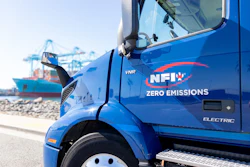
Growth is expected to be driven by port electrification and $2.8 billion in Clean Ports Program awards, which will fund thousands of new vehicles and equipment across 17 states. Maintaining momentum will require a mix of traditional incentives and creative solutions, such as zero-emission freight zones and loan-loss reserve systems.
With 42 original equipment manufacturers (OEMs) now active in the space—up from 38—the supply side of the equation is growing, but policy signals and smart incentives will remain the primary engines for the next phase of adoption.