













Calling it "a big factor in making our country great," President Donald Trump on Thursday announced the rollback of the Endangerment Finding, which has allowed presidential administrations to regulate six greenhouse gases (carbon dioxide, methane, nitrous oxide, hydrofluorocarbons, perfluorocarbons, and sulfur hexafluoride) since 2009.
Repealing the Endangerment Finding floated on the administration's radar screen last summer. President Trump on Thursday pointed to the emissions-driven complexity of modern automobiles and trucks that has made them more expensive and, in some cases, less reliable. "They have computers all over the place trying to save half an ounce of fuel," he said.
The EPA is eliminating both the Obama-era 2009 Greenhouse Gas (GHG) Endangerment Finding and all subsequent federal GHG emission standards for all vehicles and engines of model years 2012 to 2027 and beyond. The action also eliminates all off-cycle credits.
“The Endangerment Finding has been the source of 16 years of consumer choice restrictions and trillions of dollars in hidden costs for Americans,” added U.S. Environmental Protection Agency (EPA) Administrator Lee Zeldin. “Referred to by some as the ‘Holy Grail’ of the ‘climate change religion,’ the Endangerment Finding is now eliminated. The Trump EPA is strictly following the letter of the law, returning common sense to policy, delivering consumer choice to Americans, and advancing the American Dream. As EPA Administrator, I am proud to deliver the single largest deregulatory action in U.S. history on behalf of American taxpayers and consumers. As an added bonus, the off-cycle credit for the almost universally despised start-stop feature on vehicles has been removed.”
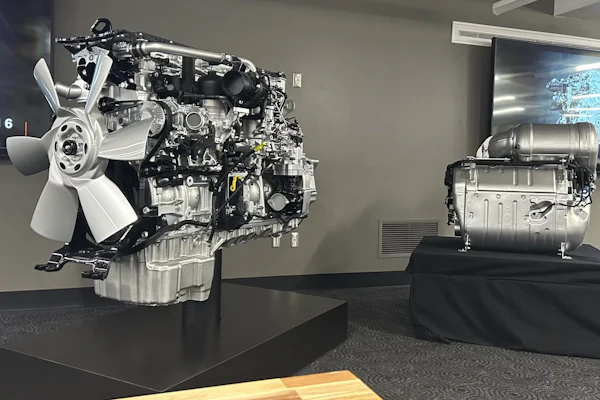
Engineering has long been underway on diesel engines that will meet 2027 emissions regulations. Many aftertreatment systems have been completely redesigned, electrical systems and engines re-engineered, and an entirely new diesel engine oil category has been implemented to reach compliance. Most truck and engine OEMs already have 2027 emissions compliant engines on the market.
[Related: International set to meet 2027 EPA standards with S13 integrated powertrain]
In finalizing its rule Thursday, the EPA said it considered and reevaluated the legal foundation of the 2009 Endangerment Finding and the text of the Clean Air Act (CAA) in light of subsequent legal developments and court decisions. The agency concluded that Section 202(a) of the CAA does not provide statutory authority for the EPA to prescribe motor vehicle and engine emission standards in the manner previously utilized, including for the purpose of addressing global climate change, "and therefore has no legal basis for the Endangerment Finding and resulting regulations."
Trump's EPA said it firmly believes the 2009 Endangerment Finding made by the Obama administration exceeded the agency’s authority to combat “air pollution” that harms public health and welfare, and that a policy decision of this magnitude, which carries sweeping economic and policy consequences, lies solely with Congress. Today’s action is only related to GHG emissions and does not affect regulations that combat criteria pollutants and air toxins.
The agency held an extended 52-day public comment period, which included four days of virtual public hearings where more than 600 individuals testified. The EPA received about 572,000 public comments on the proposed rule and made substantial updates to the final rule in response to comments.
CALSTART CEO Michael Berube said the EPA's new finalized rules significantly weaken GHG emissions standards across vehicle classes and undermine the longstanding underpinning allowing the EPA to regulate GHG emissions under the Clean Air Act.
“The U.S. transportation sector accounts for more GHG emissions than any other sector of the economy," he said. "Today’s EPA announcement ignores the significant progress U.S. industry has made toward a lower-emissions economy and represents a major step back for clean transportation and American competitiveness. Weakening vehicle standards and undermining the Endangerment Finding injects uncertainty into the market at a moment when global competition for clean vehicle leadership is accelerating."