










Carriers whose fuel surcharges reset based on the previous month’s average cost of diesel are absorbing the cost of fuel price increases, which reached $6.29 a gallon in September — the highest monthly average in the U.S. Energy Information Administration’s (EIA) weekly data going back to 1994, according to Magnus Technologies’ September 2026 Diesel Fuel Snapshot.
That average was up nearly 68% above September 2025 and $0.78 from August, working out to about 12 cents per mile at 6.5 mpg. According to Magnus, a lag in fuel surcharge reset is costing carriers roughly $300 per truck on a 2,500-mile week based on that calculation.
Prices continue to rise. The national average for on-highway diesel fuel was $6.352 per gallon as of Oct. 26, according to the EIA.
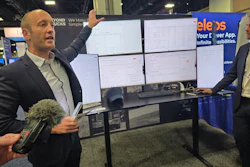
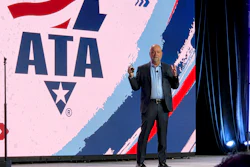
With these recurring record highs, fuel management has become a necessity in carriers’ success in the market. Three fleet leaders recently shared what they’re doing to preserve their margins during a panel on navigating fuel volatility at Trimble’s 2026 Insight conference.
Start with the driver
Every driver gets a driver scorecard at Nussbaum Transportation when they come on board. James Grier, director of fleet services at Nussbaum, said while the scorecard has a heavy safety focus, it also monitors driver habits when operating the equipment from speed and idle time to harsh braking and safe driving distance.
“We pour into our drivers. We've got a quarterly success plan that we talk through with our drivers, showing them where they're at (and) where maybe they could improve because every driver wants to keep climbing that scorecard,” Grier said. “Then we've got a team of performance coaches, and their sole purpose each and every day is to coach our drivers, come alongside them. We’ve seen pretty significant gains from having a team solely dedicated to ensuring that driver knows how to operate that equipment safely and efficiently.”
[RELATED: Fuel, safety and drivers take center stage at ATA’s Management Conference]
Jeff Parker, operations technology analyst for Bay and Bay Transportation, also noted the importance of coaching drivers’ financial mindsets when it comes to fueling.

“We have coaching with the drivers that don't understand why we route them certain ways for fuel,” he said.
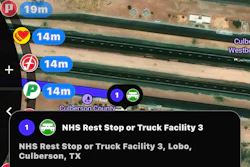
Bay and Bay, he said, is site driven on its fuel discounts, so it routes its company drivers through certain lanes where those discounts make sense using Trimble’s routing solution and IDSC server, where it obtains fuel prices every morning.
“We route them according with whatever loads we're putting in that day to make sure that they're following the current price changes that are happening as live as we can,” Parker said.
For its lease purchase drivers, the company uses the WEX card, whose platform provides insights into fuel discounts and optimized routing.
Nussbaum uses a fuel optimizer that will not allow routing to a fuel stop where the cost would rise 28 cents above the EIA average. Grier said the company reviews this weekly and uses Microsoft Power BI reports to dive into driver habits and fueling locations.
Speccing equipment
Grier said a company can spec its equipment for fuel optimization, but the benefit is offset if the driver doesn’t know how to operate it efficiently.
David Fontana, national fleet manager for AutoZone, said the company has begun to spec its trailers based on its routes. He said in large metro markets, the company has looked at speccing 45- and 42-foot trailers, recognizing that the lower weights of those trailers result in fuel economy. The company has also specced a smaller sleeper cab to shorten the wheelbase length for better turning radius and, again, less weight.
He said all trucks have the same engine settings: pedal speed at 65 and cruise control at 67 to encourage drivers to use cruise control.
“It’s much more efficient than a driver using the gas pedal, I promise you,” he said.
Fontana highlighted that AutoZone’s speccing decisions are way easier because it purchases only one brand of tractors across the fleet, which also increases the company’s purchasing power and simplifies maintenance and best practices across all locations.
Similarly, Nussbaum also runs only one OEM and specs all of its trucks the same with the exception of flatbed.
Grier said Nussbaum trucks have top kits, skirts, wheel covers, bearings, low-resistant wide base tires, etc. — anything to reduce drag going down the road.
The company focuses on down speeding and trying to get the truck to operate in top gear as often as it can at the lowest RPM, he added. Additionally, all of its equipment is specced with electronic APUs, and idling averages about 11%. Fontana noted that AutoZone switched from gen set APUs to battery powered APUs, reducing fuel consumption by several hundred gallons per truck per year.
Grier also emphasized Nussbaum’s shift this year from solar panels to a lithium technology that has resulted in a savings of 540 pounds per truck and an additional 70% reduction in idle time.
Tech behind the specs
Nussbaum also pulls analytics from Trimble Vusion, which automates IFTA (International Fuel Tax Agreement) and IRP (International Registration Plan) compliance by combining telematics, GPS, engine control module (ECM) odometer data and fuel card purchases.
Trimble Vusion Vice President Carl Robinson said Trimble has also built some tools within Vusion that allows fleets to analyze vehicle makes and models for comparisons that can help guide specs because — unlike Nussbaum and AutoZone — most fleets, he noted, tend to operate at least a couple of different OEMs.
“It's pretty easy to do the comparison just using data coming off the ECM. You're getting an MPG number for one group of trucks versus the other, but what that doesn't get accounted for is any variance to how those trucks were operated,” Robinson said. “What we're doing is building data models to quantify the impact (on fuel economy) of those different variables that exist as those trucks are out there driving around.”
He noted that using ECM data alone for analysis can lead to the wrong decision because it doesn’t account for the fact that the ECM may have been misstated or that different trucks are operated in different manners.
Because Vusion does fuel tax reporting, it brings in physical gallons purchased based on the fuel card or the tank — tracking whether its bulk or over-the-road — to determine the real MPG of a truck.
Grier said Nussbaum calculates its MPGs the same way, but the company moved away from MPGs as the primary metric for tracking progress over a decade ago. The company’s main KPI is net fuel expense.
“Once we made that big shift 16 years ago or so and started focusing on net fuel expenses, it really paid dividends for us in dealing with the volatility, especially that we're seeing now,” Grier said.
A big part of that, he noted, is because it gives the company a lot of control over fuel surcharges.
Nussbaum’s fuel surcharge is based on its average of 9.2 miles per gallon rather than the industry average because the fleet runs more efficiently. The carrier starts with the surcharge on every bid it does with a customer, offering a range based on fuel prices, from $3.50 per gallon up to $7.50 per gallon.
In addition to the fuel surcharge, he said this method helps the company pay attention to how it specs equipment, to how drivers operate the equipment and to the price it pays at the pump.